
The Parent of a Child Student visa lets one parent live in the UK while their young child — aged 4 to 11 — attends an independent school: £726 to apply, £1,560 a month in maintenance for parent and child, and a hard rule at the centre of every plan: the permission ends when the child turns 12. No work, no study, no settlement path. This guide covers the requirements, the money, and the alternatives for the years after 12.
On This Page
One Parent, One Young Child, One Deadline
The route exists for a narrow, real situation: a family placing a young child at a UK independent school who want a parent on hand rather than boarding or guardianship. Appendix Parent of a Child Student grants exactly that — and nothing more. The visa is deliberately visitor-like in character: temporary by design, tightly conditioned, and built around the child's schooling rather than the parent's life in the UK.
How the Parent Route Works
Key Characteristics
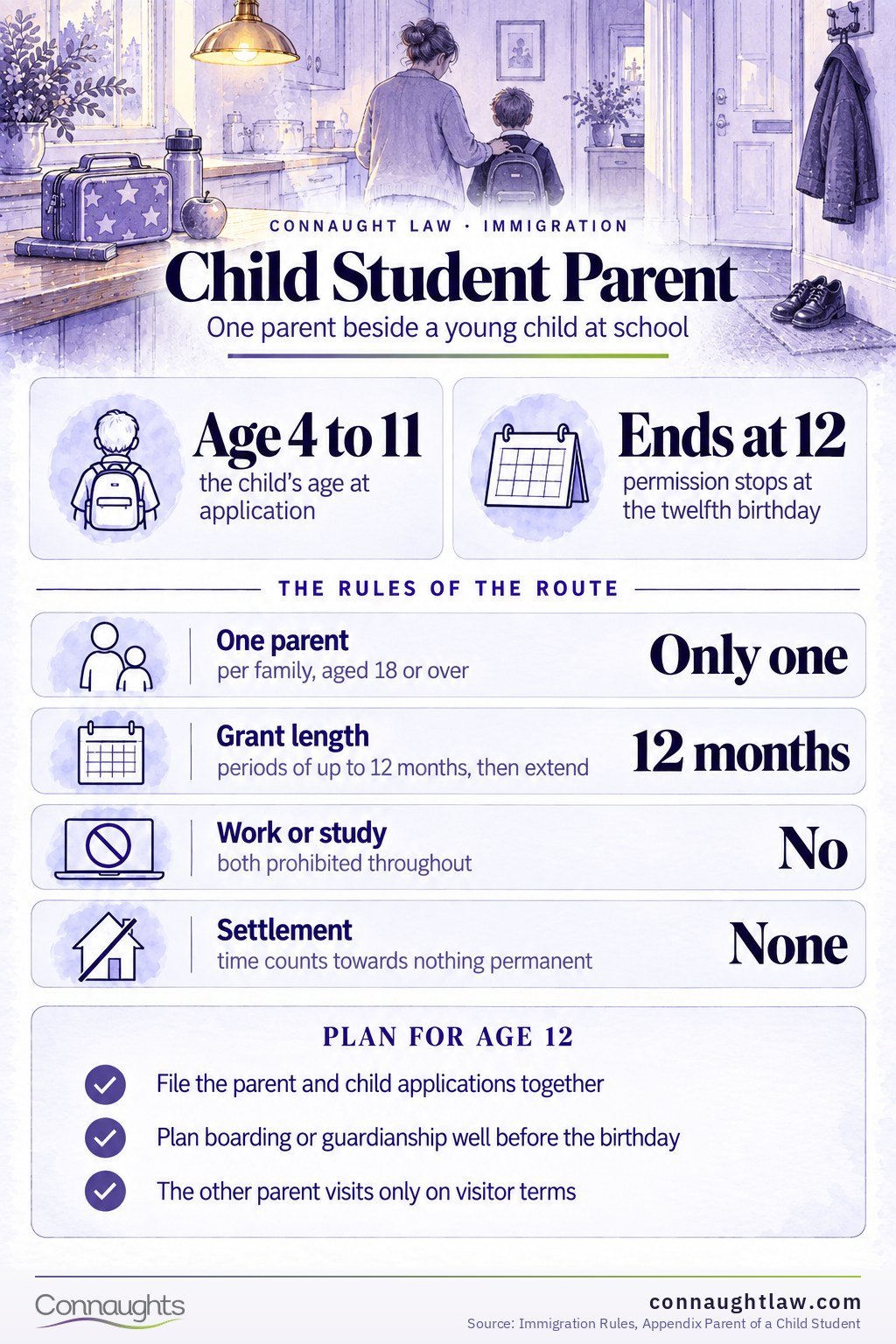
One parent per family accompanies a Child Student aged 4 to 11 at an independent school. The visa costs £726 plus the £1,035-a-year health surcharge, is granted in periods of up to 12 months, and extends while the child remains eligible — but ends when the child's visa expires or they turn 12, whichever comes first. The parent cannot work, cannot study, and must plan to leave.
Eligibility Requirements
Personal and Relationship Requirements
What Must Be Established
| Requirement | The rule | Evidence |
|---|---|---|
| Ages | Parent 18 or over; child 4 to 11 at application | Passports and birth certificate |
| Relationship | Parent or legal guardian with parental responsibility | Birth certificate, custody or guardianship documents |
| The other parent | Not living permanently in the UK | Confirmation of the family's arrangements |
| The child's school | Child Student status at a licensed independent school | The child's visa and school confirmation |
Your Child's Educational Status
The parent's permission is parasitic on the child's: the child must hold or be applying for a Child Student visa at an independent school, and the two applications are strongest made together, telling one consistent story about fees, care and family intentions. If the child's status fails or lapses, the parent's foundation goes with it.
The Age-12 Rule and Duration
Child Age and Transition Planning
The rule has no discretion in it: the parent's stay ends when the child turns 12, however mid-year the birthday falls and however settled the family feels. Well-advised families treat the twelfth birthday as a project deadline from the day they apply — choosing schools with strong boarding provision, building guardianship relationships early, and planning the parent's exit as calmly as the arrival.
Duration and Extensions
Grants run up to 12 months at a time and extend on the same requirements — child still at school, money still evidenced, arrangements still genuine — always capped by the child's visa and the age-12 ceiling. Extensions are applications, not renewals: the evidence bundle is rebuilt each time, and a parent who has drifted into UK working or study patterns will find the extension where that surfaces.
Money Rules and Evidence
Maintenance Fund Requirements
The maintenance figure is £1,560 a month for the parent and child together, for up to nine months — £14,040 at the full stretch — plus £625 a month for each additional child coming as a Child Student, on top of school fees payable under the child's own application. Funds follow the standard discipline: held 28 consecutive days, ending within 31 days of the application, with the 12-month lawful residence exemption for extensions.
Acceptable Financial Evidence
Bank statements in the right name, covering the right period, from institutions whose statements the Home Office can verify — with the money's origin explicable under Appendix Finance. School fee planning belongs in the same spreadsheet: caseworkers read the whole financial picture, and a family straining to evidence maintenance while committing to significant fees invites questions about sustainability.
Applying in Practice
Application Timing and Coordination
File the parent's application alongside or immediately after the child's, aligned to the school calendar with the standard three-week entry clearance timetable plus margin. The caseworker guidance reads the applications together, so inconsistencies between them — addresses, funding sources, stated plans — cost more than either application's individual weaknesses.
Required Documentation Package
Passports, the relationship documents, the child's CAS and school confirmation, the other parent's position, maintenance evidence, and TB certificates where applicable. The quiet essential is the family's plan in writing: where you will live, who cares for the child when, and what happens at 12 — the questions the route exists to test, answered before they are asked.
Alternatives and the Years After 12
Visitor Visas for the Other Parent
The parent left at home is not locked out: standard visits of up to six months cover school events, holidays and settling-in periods, within honest visitor limits. What the visitor rules will not tolerate is the second parent quietly living in the UK by repeat visits — a pattern border officers recognise and refuse, and one that endangers the whole family's credibility.
Professional Guardianship Services
From 12 onwards — or from the start, for families who prefer boarding — guardianship carries the pastoral load: vetted professional guardians, host families for exeats, and the school's own boarding structure. The 2025 tightening of guardianship expectations makes choosing an established, checkable arrangement part of the immigration plan, not just the parenting one.
Family Planning Strategies
The families this route serves best plan it as a phase: parent-accompanied primary years, a deliberate transition to boarding and guardianship around 12, and the child's own path onward through the Student route at 16. Parents wanting their own long-term UK future need a route of their own — work, business or family — because this one, by design, never becomes it.
Frequently askedQuestions about the Parent of a Child Student visa
Who can apply for the parent route?
One parent or legal guardian, aged 18 or over, of a child aged 4 to 11 who holds or is applying for a Child Student visa at a UK independent school — with the other parent not living permanently in the UK. Only one parent per family can hold the permission.
What does it cost?
£726 per application at the current rate, plus the £1,035-a-year immigration health surcharge, with maintenance of £1,560 a month for parent and child (up to nine months) and £625 a month for each additional Child Student sibling — all held for 28 consecutive days.
What happens when my child turns 12?
The parent's permission ends — the rule is automatic, with no discretion for school years or family circumstances. Families plan the transition to boarding or guardianship well before the birthday, and the parent's future visits run on visitor terms.
Can I work or study on this visa?
No — both are prohibited throughout, and breaches surface at extension with lasting consequences. A parent who needs to work in the UK needs a work route in their own right; this visa exists solely to accompany the child's education.
Can both parents come?
Not on this route — it is one parent per family, and the application must show the other parent is not intending to live in the UK. The second parent visits on standard visitor terms: real visits, within the six-month limits, without building a residence pattern.
Does the parent route lead to settlement?
No. Time on it counts towards nothing permanent, and the route ends at the child's twelfth birthday at the latest. Parents with long-term UK ambitions should plan a qualifying route of their own from the outset rather than hoping this one converts — it cannot.
Tell us your child's age, the school and who is coming. We'll coordinate the child and parent applications, match the money evidence to the rules, and build the age-12 transition into the plan from day one.
Get Expert Advice