
Applying for a UK spouse visa from abroad costs £5,169 up front under the fees in force from 8 April 2026 — a £2,064 application fee plus £3,105 of health surcharge — and that is only the first of four payments on the road to settlement. Across five years the mandatory Home Office charges alone come to £12,389.50. This guide sets out every figure, shows the arithmetic, and flags where money is genuinely saveable.
On This Page

Four Payments, Five Years
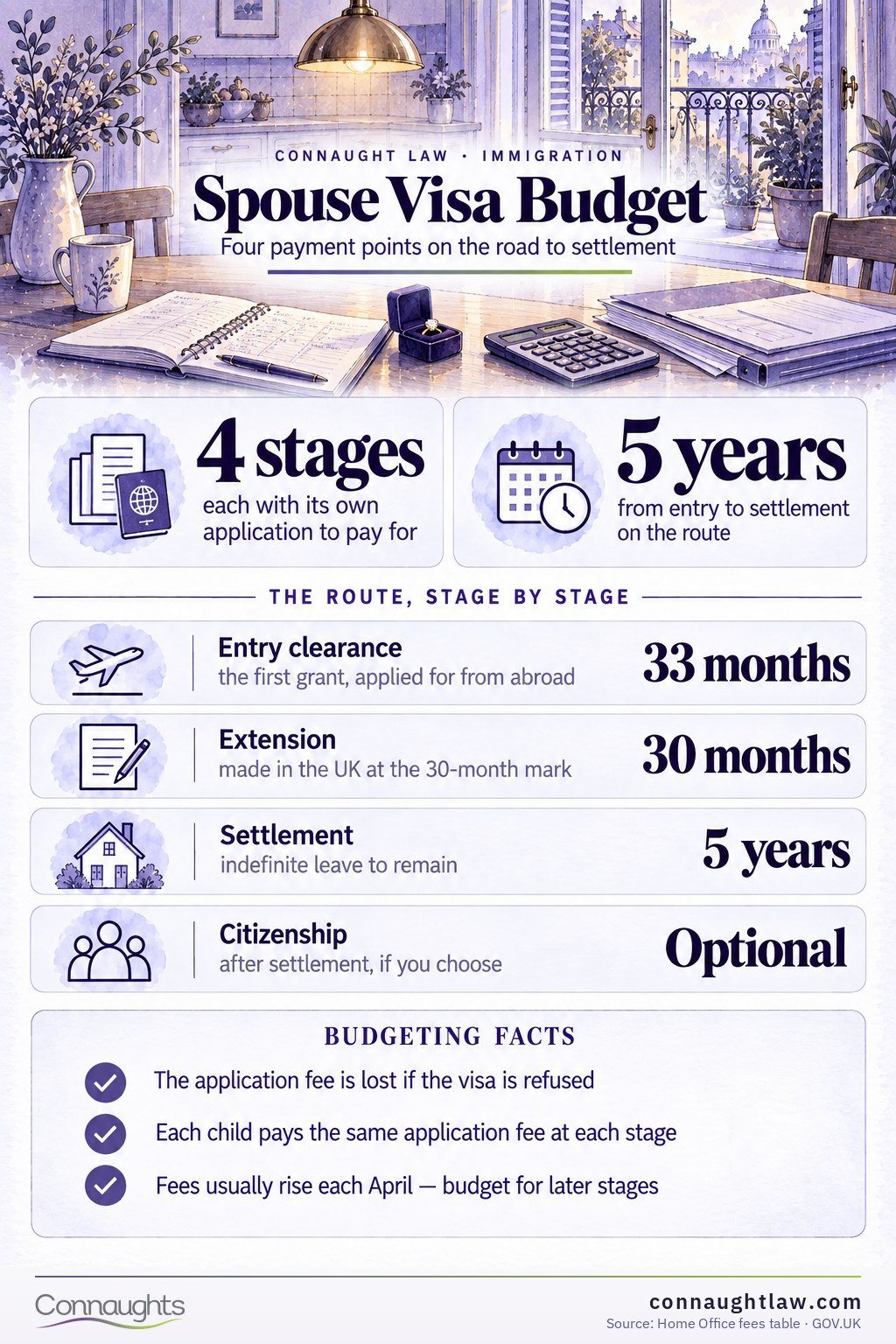
The spouse visa route charges you at four points: entry clearance (or the first in-country grant), an extension at the 30-month mark, indefinite leave to remain at five years, and — optionally — citizenship after that. Each stage has its own fee and, for the first two, its own health surcharge. Budgeting the first payment alone is how families end up borrowing at the extension stage.
Under the fee table in force from 8 April 2026: £2,064 to apply as a partner from outside the UK, £1,407 for the in-country extension, £3,226 for settlement. The health surcharge adds £3,105 to the first application and £2,587.50 to the extension. Mandatory total across the five-year route: £12,389.50 per applicant.
The Fees from 8 April 2026
Every figure below comes from the Home Office immigration and nationality fees table effective 8 April 2026, checked on 1 August 2026. Fees usually rise each April, so any guide quoting last year's rates is already wrong at every stage of the route.
Fees at Each Stage
| Stage | Application fee | Health surcharge | Stage total |
|---|---|---|---|
| Entry clearance (outside the UK) | £2,064 | £3,105 (33 months) | £5,169 |
| Extension in the UK | £1,407 | £2,587.50 (30 months) | £3,994.50 |
| Settlement (indefinite leave to remain) | £3,226 | None | £3,226 |
| British citizenship (optional) | £1,709 + £130 ceremony | None | £1,839 |
The Health Surcharge Arithmetic
The immigration health surcharge is £1,035 a year for adults and £776 for children, charged for the whole grant when you apply. Part-years over six months are charged as full years, which is why the 33-month entry visa costs 2 × £1,035 + £1,035 = £3,105, while the 30-month extension charges its final half-year at half rate: 2 × £1,035 + £517.50 = £2,587.50. If the application is refused, the surcharge — unlike the fee — is refunded.
Processing Times and Paid Speed
Per gov.uk on the day of writing: applications from outside the UK usually get a decision within 12 weeks, in-country applications within 8 weeks — but an in-country application that does not meet the rules and relies on human-rights grounds currently takes around 12 months. Timing, in other words, is mostly determined by which route your application actually sits on, not by which service you pay for.
Priority and Super Priority
The services differ by side of the border. For family applications made outside the UK, the £500 priority service targets a decision within 30 working days. In the UK, £500 priority targets 5 working days and £1,000 super priority the next working day, per the gov.uk faster-decision guidance checked on the day of writing. Paying for speed changes nothing about the decision itself — a borderline application decided faster is simply refused faster.
Costs Beside the Home Office Fees
Real applications carry costs no fee table shows: an approved English test, certified translations of any document not in English, and — for applicants resident in listed countries — a tuberculosis test certificate. Prices vary by provider and country, so budget for them by getting quotes, not from figures in articles; what matters is knowing each item exists before the deadline finds it.
Adding Children to the Budget
Each dependent child pays the same application fee as the main applicant at each stage, with the child-rate surcharge on top: £776 × 3 = £2,328 for a 33-month entry grant and £1,940 for a 30-month extension. A family of three entering together therefore pays three application fees and three surcharges — the route's cost scales per person, not per household.
What Gets Refunded
The health surcharge is refunded automatically where an application is refused or withdrawn. The application fee is not — it pays for consideration, not success. That asymmetry is the single most important budgeting fact on this page: the £2,064 cost of a refusal is borne entirely by the applicant, and a second attempt pays the full fee again.
Documents, Translations and Tests
The English requirement climbs across the route — A1 to enter, A2 to extend, B1 for settlement — and each level normally means a paid test at an approved provider unless an exemption applies. Certified translations must accompany any supporting document not in English or Welsh. Both are small line items that become large ones when done twice under time pressure.
The Five-Year Total
A Worked Example for One Applicant
One adult applying from abroad and staying to settlement: £5,169 at entry + £3,994.50 at extension + £3,226 at settlement = £12,389.50 in mandatory Home Office charges. Adding citizenship brings it to £14,228.50. Treat these as today's floor rather than a fixed total — the April fee cycle means the later stages will usually cost more by the time you reach them than the current table shows.
None of these fees buys a visa unless the £29,000 minimum income requirement (or the savings alternative) is met at the right stages with the right evidence. The financial requirement is its own discipline — our spouse visa financial requirements guide covers the thresholds, the savings formula and the exemptions.
Keeping the Route Affordable
How Money Is Actually Lost
The route's real losses are not the published fees but refusals and repeats: a refused application forfeits its fee, restarts the clock and often adds legal costs the first attempt never needed. The economical strategy is unglamorous — meet the full requirements precisely, evidence them the way the rules specify, and pay for speed only when a date genuinely demands it. Where the case has complications, our family visa solicitors price the work against what a refusal would cost.
Where Costs Can Be Saved
| Choice | Saving | Trade-off |
|---|---|---|
| Standard instead of priority processing | £500–£1,000 per application | The published waiting times apply |
| Passing B1 English at the first test | Two further test fees — B1 covers extension and settlement | Harder test earlier in the route |
| A complete, right-first-time application | The full fee of a refused attempt | More preparation before submitting |
| Applying before an April fee rise | The year's uplift at that stage | Only works when you are ready anyway |
The Fee Outlook
Two things should shape a forward budget. First, the April cycle: assume each future stage costs more than today's table. Second, the settlement rules themselves are under review — the earned-settlement proposals consulted on in early 2026 remain proposals, not law, but a family whose settlement date falls years out should follow them via the Commons Library briefing rather than assume the current five-year shape is guaranteed. Where paying a fee is genuinely impossible, a fee waiver application exists for in-country applicants who can evidence destitution.
Frequently askedQuestions about spouse visa costs
How much is the UK spouse visa fee in 2026?
£2,064 to apply from outside the UK and £1,407 for an in-country extension, under the fee table in force from 8 April 2026. The health surcharge is paid on top at £1,035 a year — £3,105 with an entry application and £2,587.50 with an extension.
What is the total cost over five years?
£12,389.50 per adult in mandatory Home Office charges: £5,169 at entry, £3,994.50 at extension and £3,226 at settlement. Optional British citizenship adds £1,709 plus the £130 ceremony. English tests, translations and any TB certificate come on top, and fees usually rise each April.
How much does the fiancé visa route cost?
The fiancé application pays the same £2,064 entry fee but no health surcharge, because the grant is six months. After marrying you switch in-country at £1,407 plus the £2,587.50 surcharge — the mechanics are covered in our fiancé visa guide.
Can we pay for a faster decision?
Yes, where offered: £500 priority buys a decision within about 30 working days on family applications from outside the UK, or 5 working days in-country, and £1,000 super priority the next working day in-country. Standard times are about 12 weeks outside the UK and 8 weeks inside.
Is anything refunded if the application is refused?
The health surcharge is refunded; the application fee is not. That makes refusal the most expensive outcome on the route — the fee is lost, and a fresh application pays it again. Money spent getting the first application right is protecting the largest single sum at risk.
Are there any fee exemptions or waivers?
In-country applicants who would be left destitute by the fee can apply for a fee waiver on the human-rights routes, and the surcharge has its own limited exemptions. Waivers are evidence-heavy and refused where the picture is incomplete — treat them as applications in their own right.
Tell us where you are applying from, who is coming with you and which stage you are at. We'll set out the payments ahead of you at current rates and where your budget is genuinely at risk.
Get Expert Advice