
The UK fiancé visa gives you six months to enter the UK, marry your British or settled partner, and switch onto the spouse visa route — all without leaving. It costs £2,064 under the fees in force from 8 April 2026, carries no health surcharge, and applies the same £29,000 financial requirement as the spouse visa itself. What it does not allow is work, study, or a seventh month. Here is how the route actually runs.
On This Page

Six Months to Marry
The fiancé visa is the route for couples who want the wedding in the UK before the marriage-based visa exists. It is deliberately short and deliberately restricted: long enough to give notice, marry and apply to stay, and narrow enough that the Home Office can be confident it is not being used as a working visa with a ceremony attached.
What the Fiancé Visa Is For
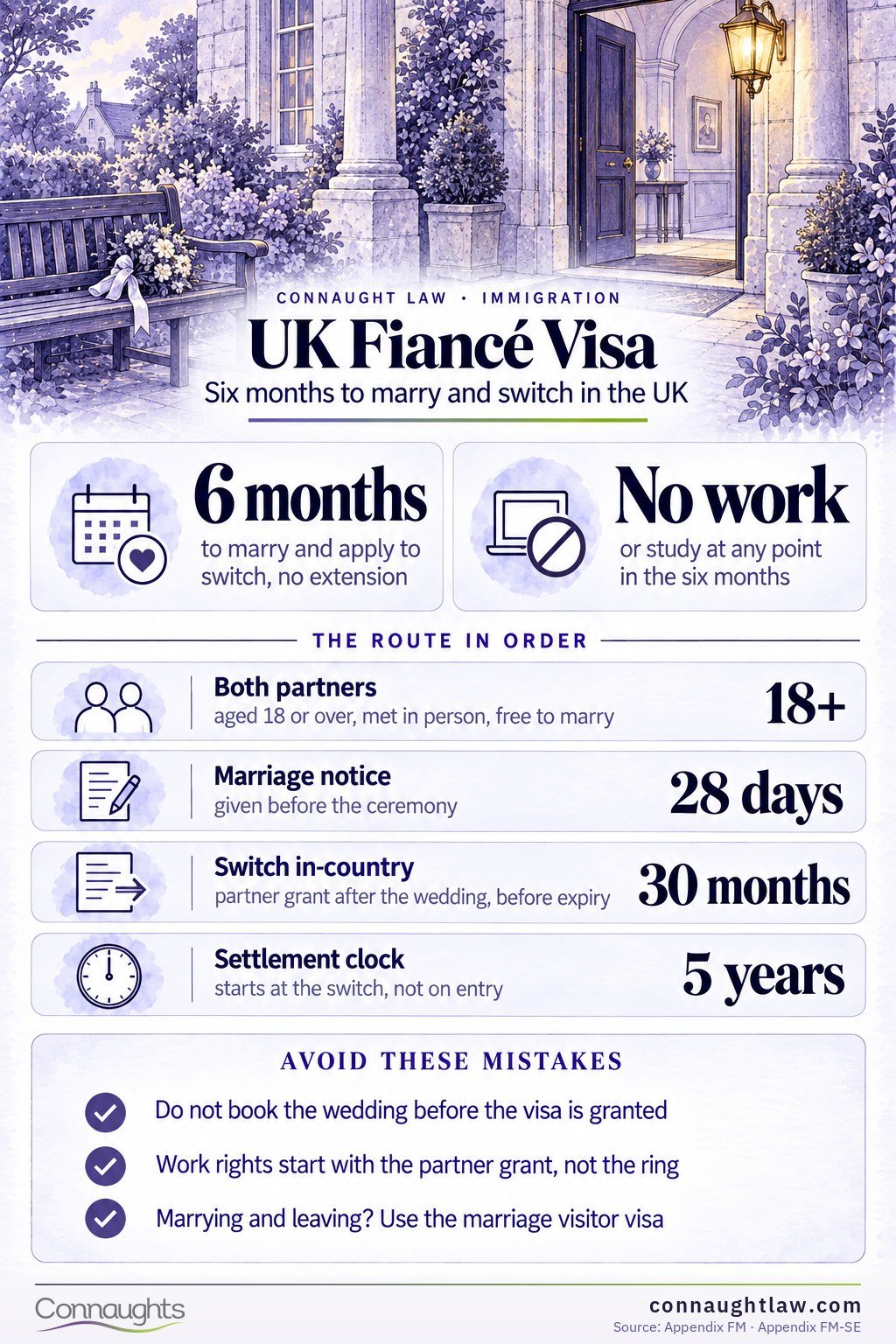
A six-month entry visa under Appendix FM for the fiancé, fiancée or proposed civil partner of a British citizen or settled person, granted so the couple can marry or form a civil partnership in the UK. After the ceremony the visa holder switches in-country onto the partner route. Couples who only want to marry here and then leave use the marriage visitor visa instead.
Key Characteristics
- Six months, no extension — the wedding and the switch application both have to happen inside the grant.
- No work and no study during the fiancé period, in any capacity.
- No health surcharge, because the grant is under six months — the surcharge arrives with the switch.
- The financial, English and accommodation rules are the spouse visa's rules, applied at the same standard from day one.
The Requirements in Full
The application is decided under Appendix FM, and the current gov.uk family visa guidance — checked on 1 August 2026 — frames the tests below. Both partners must be 18 or over, have met in person, be free to marry, and intend to marry within the six months.
Core Eligibility Requirements
| Requirement | What must be shown |
|---|---|
| Genuine relationship | A real, subsisting relationship and a genuine intention to marry within six months — evidenced, not asserted |
| Financial requirement | £29,000 income or the cash savings alternative, in the form Appendix FM-SE specifies |
| Accommodation | Somewhere adequate to live without public funds and without overcrowding |
| English language | A1 speaking and listening from an approved test, or a recognised exemption |
| Suitability | No criminality or immigration history that triggers refusal under the suitability rules |
The Money Test
Where the Threshold Stands
The minimum income requirement is £29,000, per gov.uk on the day of writing — and unlike the pre-2024 regime, no separate child supplements apply to new applications. The previously announced rises to £34,500 and £38,700 never happened: they were shelved, and the Migration Advisory Committee's June 2025 review recommended against the £38,700 level. No change has been implemented since, so treat any article asserting a higher figure — or an imminent rise — as out of date. Applicants who entered the route before 11 April 2024 keep the transitional £18,600 rules at extension.
Income That Counts
For an application from abroad the sponsor's income does the work: salaried employment needs six months with the same employer (or twelve months of evidence where shorter), self-employment is assessed on the last full tax year, and pension and certain non-employment income can count. The applicant's own overseas earnings do not count towards the threshold — a point that catches many couples budgeting on two incomes that the rules only half-recognise.
The Savings Alternative
Cash savings can replace income entirely at £88,500 — the arithmetic is £16,000 plus 2.5 × £29,000 — or top up a shortfall using the same formula, with the money held for six months in the couple's own names. The evidential rules sit in Appendix FM-SE, and they are unforgiving about source, form and dates; our financial requirements guide works through the permutations.
Documents That Decide It
Essential Document Categories
| Category | What to include | Watch for |
|---|---|---|
| Identity | Current passport for both partners; divorce or death certificates where either was previously married | Freedom to marry must be documented, not assumed |
| Relationship | Engagement evidence, visit history, communication records, wedding plans in progress | Quality over volume — a venue booking says more than 400 screenshots |
| Financial | Six months of payslips and matching bank statements, employer letter, or the FM-SE set for other income | Documents must match each other to the pound |
| English | A1 SELT certificate from an approved provider (valid two years), or exemption evidence | Only approved tests count — the right level from the wrong provider fails |
| Accommodation | Tenancy, ownership or a letter confirming where the couple will live | Adequacy is assessed against household size |
| Health | TB test certificate where the applicant lives in a listed country | Certificates are valid six months — sequence the test near the application |
What It Costs
The Fee, Without the Surcharge
The application fee is £2,064 — the family entry clearance rate in the fee table effective 8 April 2026 — and, unusually for a UK visa, there is no immigration health surcharge, because the grant is under six months. The £500 priority service, where available, targets a decision within 30 working days for family applications from outside the UK.
A Second Bill After the Wedding
The fiancé fee is only the opening instalment: the in-country switch after marriage costs £1,407 plus £2,587.50 of health surcharge for the 30-month grant. Budget the two stages together — £6,058.50 across the first year — plus the English test, any translations and the TB certificate where required. The whole route's costs, through to settlement, are set out in our spouse visa fees guide.
Timing the Application
What Drives the Timeline
Applications from outside the UK usually get a decision within 12 weeks, per current gov.uk guidance. The clock that matters more is the wedding's: UK ceremonies need notice to be given, venues need booking, and the six-month visa window has to hold all of it plus the switch application. Working backwards from an intended wedding date — visa decision, travel, 28 days' notice, ceremony, switch — is the single most useful planning exercise on this route.
Fiancé or Spouse Visa First?
Couples who can marry abroad face a genuine choice: marry first and apply for the spouse visa, or take the fiancé route and marry here. The costs and consequences differ more than the fees suggest, because the five-year settlement clock only starts with the partner grant — the fiancé months do not count towards it. The spouse visa's own tests are covered in our spouse visa requirements guide.
Detailed Route Comparison
| Consideration | Fiancé route | Spouse visa direct |
|---|---|---|
| First grant | 6 months, no work or study | 33 months with full work rights |
| Cost to the same point | £2,064, then £1,407 + £2,587.50 at the switch — £6,058.50 | £2,064 + £3,105 surcharge — £5,169 |
| Settlement clock | Starts at the switch, after the wedding | Starts immediately on entry |
| Wedding location | In the UK, within the six months | Already married before applying |
The Application, Step by Step
From Form to Decision
The sequence is: online application and fee, biometrics at a visa application centre, document upload, decision. Once granted, travel within the vignette window, give notice of marriage, marry, and submit the in-country partner application before the six months expire. Every stage after the grant runs on your diary, not the Home Office's — which is exactly why the route rewards planning and punishes drift.
Where Applications Go Wrong
- Weddings booked before the visa is granted, forcing rushed applications and expensive re-bookings.
- Financial evidence that meets the threshold in substance but not in the specified FM-SE form — the commonest refusal on the family routes.
- Thin engagement evidence from couples whose relationship is real but under-documented.
- The switch left so late that a delay or request for more evidence pushes the couple past the six-month line.
Work and Study Restrictions
After the Wedding
Work rights arrive with the partner grant, not the wedding ring: after marrying, the visa holder can work only once the in-country switch is granted, which currently takes around 8 weeks at the standard service. Households budgeting on two incomes should plan for that gap — or price the in-country priority service against the lost earnings.
Why the Rules Bite
Working during the fiancé period is a breach that surfaces exactly when it hurts most — in the switch application, where the couple's credibility is the currency. Overstaying the six months converts a well-planned route into an overstay case. Neither risk is worth what it briefly buys; both are avoidable with a calendar and a margin.
Frequently askedQuestions about the fiancé visa
How much does the fiancé visa cost in 2026?
£2,064 under the fee table in force from 8 April 2026, with no health surcharge because the grant is under six months. The in-country switch after marriage adds £1,407 plus £2,587.50 of surcharge, bringing the first year to £6,058.50 before tests and translations.
Can I work on a fiancé visa?
No — work and study are prohibited for the whole six months, and the prohibition covers employment, self-employment and voluntary roles that would otherwise be paid. Work rights begin only when the partner visa is granted after the wedding, not at the ceremony itself.
What income do we need?
£29,000 a year, met from the sponsor's income for applications from abroad, or cash savings of £88,500 (£16,000 + 2.5 × £29,000), or a combination under the same formula. The planned rises to £34,500 and £38,700 were shelved and have not returned.
How long does the application take?
Usually within 12 weeks from outside the UK at the standard service; the £500 priority option targets 30 working days where available. Build the decision time, travel, 28 days' marriage notice and the ceremony into one timeline before booking anything non-refundable.
What happens after we marry?
You apply in-country to switch onto the partner route before the fiancé visa expires, evidencing the marriage and meeting the financial and English rules again. The grant is 30 months, work rights begin, and the five-year settlement clock starts from that point.
Can we use the fiancé visa just to get married and leave?
You could, but the marriage visitor visa exists for exactly that at £135: it allows the ceremony but no switch to staying. The fiancé route is worth its higher cost only if the plan is to remain in the UK afterwards.
Tell us your wedding timetable, where the application will be made from and how the £29,000 requirement will be met. We'll tell you whether the six-month window holds your plan and what to fix before you apply.
Get Expert Advice