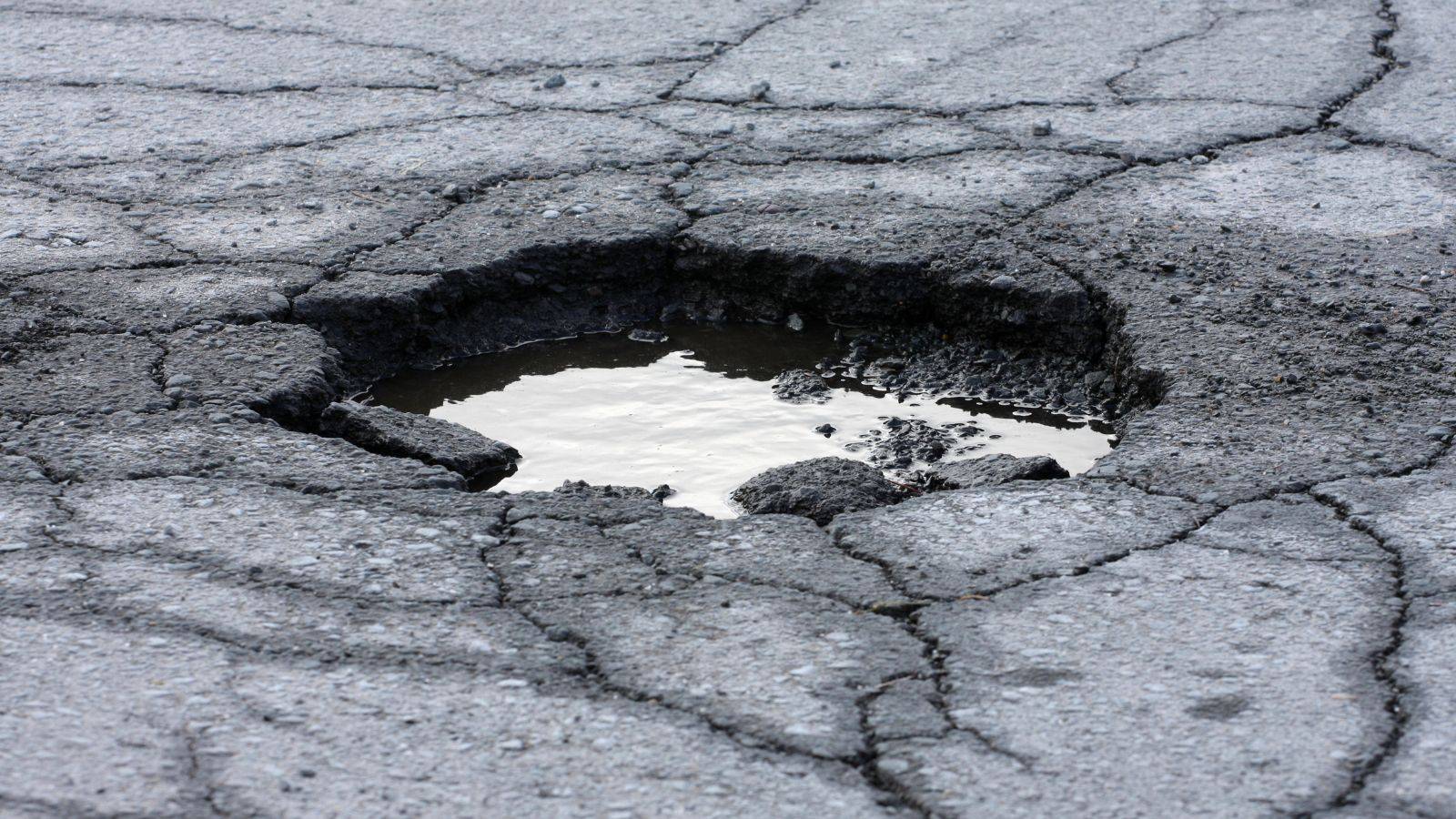
Understanding Pothole Cycling Accident Claim UK 2026 Rights and Council Liability
Britain's pothole crisis poses acute dangers for cyclists whose narrow tyres, two-wheeled instability, and unprotected riding position make road surface defects potentially catastrophic. Cycling UK analysis of STATS19 police data reveals that 255 cyclists have been killed or seriously injured due to road surface defects since 2017, averaging nearly one serious casualty per week across the country. Understanding council liability under the Highways Act 1980 proves essential for any cyclist injured by a pothole, crack, or road depression seeking compensation through a pothole cycling accident claim UK.
The ALARM 2025 survey published by the Asphalt Industry Alliance confirms that the road maintenance backlog has reached nearly 17 billion pounds, with 52% of the local road network having less than 15 years of structural life remaining. Despite 1.9 million potholes being filled during 2024/25 at a cost of 137.4 million pounds, 94% of local authority highway teams reported no improvement to their networks. For cyclists, this deterioration translates directly into increased accident risk, particularly on secondary roads where inspection frequencies are lowest and where cycling traffic is increasingly directed by infrastructure planning.
A pothole cycling accident claim UK against a local authority differs fundamentally from claims against negligent drivers. Highway authority liability rests on statutory duties and specific legal defences that require strategic evidence gathering, including Freedom of Information requests for maintenance records, photographic documentation of defect dimensions, and expert analysis of inspection regime adequacy. Professional legal guidance helps cyclists navigate these complex council liability frameworks to secure appropriate compensation for injuries sustained on roads that should have been maintained to safe standards.
- - How Serious Is the UK Pothole Crisis for Cyclists?
- - What Legal Duty Do Councils Owe Cyclists Under the Highways Act?
- - How Do Courts Assess Council Pothole Defence Claims?
- - What Evidence Strengthens a Pothole Cycling Accident Claim?
- - When Should Cyclists Report Pothole Accidents and File Claims?
- - Frequently Asked Questions
How Serious Is the UK Pothole Crisis for Cyclists?
Round Our Way's Freedom of Information analysis revealed that local authorities received 952,064 pothole reports between January and November 2024, representing a five-year high and exceeding the 950,213 reports recorded for the entire 2023 calendar year. This acceleration reflects both deteriorating road conditions driven by climate-related freeze-thaw cycles and improved public reporting mechanisms. For cyclists, each unreported or unrepaired pothole represents a potentially life-changing hazard that motor vehicle occupants, protected by suspension systems and enclosed bodywork, may barely notice.
Department for Transport STATS19 data for 2024 recorded 82 cyclist fatalities and 3,822 serious injuries across Great Britain according to the DfT pedal cycle casualty factsheet, with road surface defects contributing to a significant proportion of single-vehicle cycling accidents where no other road user is involved. The AA Pothole Index recorded 643,318 pothole-related breakdown incidents during 2024, while the ALARM 2025 survey found that roads are resurfaced on average only once every 93 years, creating a progressive deterioration cycle that disproportionately threatens vulnerable road users.
Scale of the Road Maintenance Crisis Affecting Cyclists
| Road Maintenance Indicator | 2024/25 Figure | Source |
|---|---|---|
| Road repair backlog | 16.81 billion pounds | ALARM 2025 |
| Potholes filled 2024/25 | 1.9 million | ALARM 2025 |
| Pothole reports Jan-Nov 2024 | 952,064 (5-year high) | Round Our Way FOI |
| Network with under 15 years life | 52% (106,000 miles) | ALARM 2025 |
| Average resurfacing frequency | Once every 93 years | ALARM 2025 |
| Cyclist KSI from road defects (2017-2024) | 255+ people | Cycling UK |
Cyclists face heightened vulnerability to potholes compared with other road users for several biomechanical reasons. Narrow bicycle tyres (typically 23-32mm for road bikes) can drop entirely into defects that wider vehicle tyres bridge across. Two-wheeled stability means that even minor deflections from potholes cause loss of control, while the absence of suspension on most bicycles transmits full impact force through handlebars and saddle directly to the rider. These physical characteristics mean defects that pose no meaningful risk to motor vehicles can be genuinely dangerous to cyclists, a distinction that councils must account for when assessing road safety under their statutory duties. Understanding these dynamics strengthens any bicycle accident compensation UK claim where road surface conditions contribute to the accident.
What Legal Duty Do Councils Owe Cyclists Under the Highways Act?
Section 41 of the Highways Act 1980 imposes an absolute duty on highway authorities to maintain highways maintainable at public expense. For pothole cycling accident claim UK purposes, this means the claimant need only prove three elements: that the highway was in a dangerous condition, that the dangerous condition caused the accident, and that the cyclist suffered injury as a result. Unlike ordinary negligence claims against drivers, there is no requirement to prove that the council knew about the specific pothole or acted unreasonably. The burden then shifts to the council to establish a statutory defence.
The definition of "dangerous" for highway purposes is assessed by reference to the standard reasonably expected by ordinary careful road users. Crucially, this assessment must consider all categories of traffic that might reasonably be expected to use the road, including cyclists. A pothole measuring 40mm deep and 300mm wide, the standard intervention threshold adopted by approximately three-quarters of UK councils, might pose minimal risk to a car but could trap a bicycle wheel and cause a high-speed fall. Courts have increasingly recognised this distinction, acknowledging that defects below motor vehicle intervention levels may still constitute dangers for cyclists and pedestrians.
Highway authority responsibility varies depending on road classification. Local councils maintain the vast majority of public roads, while National Highways manages motorways and major trunk roads. In London, Transport for London manages the Transport for London Road Network while individual boroughs maintain local roads. Identifying the correct defendant authority is essential for pursuing any pothole cycling accident claim UK, and claimants in cycling accident claims London face particular complexity navigating TfL and borough jurisdictional boundaries.
How Do Courts Assess Council Pothole Defence Claims?
Section 58 of the Highways Act 1980 provides highway authorities with a statutory defence requiring proof that they took reasonable care to ensure the highway was not dangerous for traffic. Courts assess this defence by examining whether the authority maintained a reasonable system of inspection, whether inspections were carried out at appropriate frequencies, whether the road was correctly categorised within the inspection hierarchy, and whether reported defects received timely repair responses.
The case of Wilkinson v York City Council (2011) illustrates how road categorisation errors undermine the Section 58 defence. The claimant cyclist's front wheel hit a pothole on a road the council had classified as a local access road requiring only annual inspection. The court found the road should have been categorised higher because of nearby shops and a school, meaning more frequent inspections were required. This misclassification defeated the council's Section 58 defence, establishing that authorities cannot rely on inspection systems built on incorrect road categorisations.
More recently, in Karpasitis v Hertfordshire County Council (2025), the Court of Appeal allowed a cyclist's appeal against dismissal of his claim for injuries sustained when his bicycle hit a hole in a grass verge adjacent to the carriageway. This case reinforced that the Section 58 defence requires more than simply following a predetermined inspection schedule. Courts examine whether the overall system of maintenance was reasonable, including reactive responses to reports, the adequacy of inspector training, and whether the categorisation of different highway elements reflects actual usage patterns.
Pothole Cycling Accident Claim UK: Key Factors Courts Consider
- Road Categorisation Accuracy: Whether the highway was correctly classified within the inspection hierarchy based on traffic volume, user types, and proximity to schools, shops, and cycling routes
- Inspection Frequency Compliance: Whether scheduled inspections were actually carried out at the prescribed intervals and by competent, trained inspectors
- Reactive Response Systems: Whether the council had effective procedures for responding to reported defects between routine inspections, as examined in Crawley v Barnsley MBC (2017)
- Repair Timescale Adequacy: Whether defects identified during inspection received timely repairs proportionate to the risk, with emergency defects requiring 2-hour response and standard defects within 28 days
- Cyclist-Specific Risk Assessment: Whether the inspection regime recognised that defects below motor vehicle intervention levels may constitute dangers for cyclists using the road
The Crawley v Barnsley Metropolitan Borough Council (2017) decision proved particularly significant for cyclists because it examined whether councils must respond to reported defects outside normal working hours. A pothole was reported on a Friday afternoon but no action was taken until Monday morning. The injured claimant fell into the defect on Saturday evening. The Court of Appeal found that the council's failure to have an effective weekend response system for serious reported defects meant it could not establish the Section 58 defence, even though its routine inspection schedule was otherwise reasonable.
For cyclists pursuing a pothole cycling accident claim UK, these cases demonstrate that councils cannot simply point to a paper inspection system. The defence requires genuine, operational effectiveness. Councils must prove that inspections actually took place, that inspectors were competent and properly trained, that road categorisations reflected current conditions, and that repair systems operated effectively at all times. Professional legal representation coordinates the evidence gathering necessary to challenge these defence assertions, similar to the investigative approach required in slip and fall compensation claims involving public authority premises liability.
What Evidence Strengthens a Pothole Cycling Accident Claim?
Photographic evidence forms the cornerstone of any pothole cycling accident claim UK, but as Walsh v Kirklees Council demonstrated, photographs must accurately convey defect dimensions. The High Court rejected a cyclist's pothole claim partly because photographs with a tape measure did not reliably establish the pothole's depth due to road material visible within the defect. This underscores the importance of photographing potholes with a clear measurement reference, ideally a ruler placed vertically inside the defect, from multiple angles showing both the depth and the surrounding road context.
Freedom of Information requests to the highway authority represent a powerful tool for challenging the Section 58 defence. Claimants are entitled to request the council's complete inspection records for the road in question for the 12 months preceding the accident, any reports of defects at or near the accident location, the road's classification within the inspection hierarchy, the council's highway maintenance policy, and repair records showing response times for previously reported defects on the same road. This documentary evidence often reveals gaps between the council's stated policies and actual operational practice.
Evidence Checklist for Pothole Cycling Accident Claim UK
- -- Photograph the pothole with a ruler showing depth (40mm threshold) and width (300mm threshold) from multiple angles
- -- Record exact GPS coordinates and save cycling computer or Strava data showing route and location
- -- Report the pothole to the council immediately and record the reference number
- -- Preserve helmet camera or dashcam footage showing road conditions before the accident
- -- Obtain witness contact details from any passers-by or fellow cyclists
- -- Submit FOI request for inspection records, previous reports, and repair history for that road
- -- Keep damaged bicycle and equipment, and photograph damage to the bicycle immediately
- -- Attend A&E or GP promptly and ensure all injuries are documented in medical records
GPS and cycling computer data provides objective evidence of accident location and riding speed, which counters potential contributory negligence arguments about excessive speed or inattention. Strava, Garmin, and similar platforms record ride data that can pinpoint exactly where a cyclist stopped or deviated, corroborating the account of a pothole impact. Helmet camera footage is particularly valuable for pothole claims because it shows road surface conditions in real time, potentially capturing the defect before impact and demonstrating that it was not visible or avoidable at cycling speed. These digital evidence sources increasingly support e-bike accident claims UK where higher speeds may affect both injury severity and defence arguments about avoidability.
Medical evidence must comprehensively document all injuries sustained, including those that may initially appear minor. Cycling pothole accidents commonly cause wrist and collarbone fractures from impact with handlebars or the ground, shoulder dislocations, hip injuries, facial and dental damage, and traumatic brain injuries. Delayed symptom presentation is common for concussion, soft tissue injuries, and spinal problems, making prompt and thorough medical assessment essential for both treatment and evidence purposes. Expert orthopaedic and neurological assessments may be required to establish the full extent of injuries and their relationship to the pothole accident.
When Should Cyclists Report Pothole Accidents and File Claims?
Immediate reporting to the highway authority serves dual purposes in a pothole cycling accident claim UK. First, it creates a contemporaneous record linking the defect to the accident. Second, the council's response to the report provides additional evidence: a rapid repair effectively acknowledges the defect's existence and seriousness, while inspection records may reveal whether the pothole was already known about before the accident. Reporting through the council's official online system or FixMyStreet generates a timestamped record, though cyclists should also take their own photographs before the council attends, as post-repair evidence is far less valuable.
The three-year limitation period under the Limitation Act 1980 runs from the date of the accident for adult claimants. Children injured in pothole cycling accidents benefit from extended limitation periods, with claims maintainable until the child's 21st birthday. While three years may seem generous, the practical reality is that effective pothole claims require early evidence gathering. Councils may repair defects within 48 hours of a report, inspection records may be archived or overwritten, and witnesses' memories fade. Legal representation should be instructed as soon as possible to coordinate evidence preservation, submit FOI requests, and protect the claimant's position.
Contributory negligence may reduce compensation where the cyclist was partly responsible for the accident. Common defence arguments include that the pothole was visible and avoidable, that the cyclist was riding too fast for conditions, or that the cyclist was not paying adequate attention to the road surface. However, the Highway Code 2022 hierarchy of road users, which places greater responsibility on those who can cause the most harm, reinforces the principle that vulnerable road users should not bear excessive blame for councils' failures to maintain safe road surfaces. Courts generally take a measured approach, recognising that cyclists legitimately focus attention on traffic rather than constantly scanning for road defects.
- -- Councils have a strict statutory duty under Highways Act Section 41 to maintain roads safely for all users including cyclists
- -- The Section 58 defence requires proof of a genuinely effective inspection and repair system, not merely a paper policy
- -- Pothole depth of 40mm and width of 300mm represents the standard intervention threshold for most UK councils
- -- Photographs with measurement references and FOI requests for maintenance records are the two most powerful evidence types
- -- Cyclists face heightened pothole risk due to narrow tyres and two-wheeled instability, which courts increasingly recognise
- -- Immediate evidence preservation is critical because councils may repair defects within days of a reported accident
Specialist solicitors experienced in highway authority claims coordinate comprehensive investigations including FOI-obtained maintenance records, independent road surface expert assessments, and medical evidence establishing the full extent of cycling injuries. Legal professionals can identify whether the council has correctly categorised the road, whether inspection frequencies comply with the authority's own policy, and whether the reactive repair system operated effectively, building the strongest possible case for compensation. The complexity of pothole claims, involving statutory duties, technical inspection standards, and specialist evidence, means professional representation typically proves essential for achieving fair outcomes in these cases, applying similar principles to those used in personal injury claims against institutional defendants.
Frequently Asked Questions
How deep does a pothole need to be for a cycling accident claim UK?
Most UK councils use an intervention threshold of 40mm depth and 300mm width for carriageway defects. However, courts recognise that shallower defects may be dangerous for cyclists due to narrow tyre widths and two-wheeled instability. The legal test is whether the highway was dangerous for the traffic reasonably expected to use it, which includes cycling traffic. A pothole below the standard intervention level may still support a successful claim if it posed genuine danger to cyclists.
Can I claim against the council for a pothole cycling accident claim UK if they did not know about the pothole?
Yes. Under Highways Act Section 41, the council's duty to maintain is absolute, meaning actual knowledge of the specific pothole is not required for liability. The burden shifts to the council to prove a Section 58 defence, demonstrating it had a reasonable inspection system in place. If inspections were inadequate, infrequent, or the road was incorrectly categorised, the defence fails regardless of whether the council knew about the particular defect.
What is the Section 58 defence in pothole cycling accident claims?
Section 58 of the Highways Act 1980 allows councils to defend pothole claims by proving they took reasonable care to ensure the highway was safe. This requires demonstrating an adequate inspection system, appropriate road categorisation, competent inspectors, reasonable repair response times, and effective reactive reporting systems. Courts scrutinise whether the system operated effectively in practice, not merely whether a policy existed on paper. Cases like Crawley v Barnsley MBC (2017) show that gaps in reactive response systems defeat this defence.
How do I obtain council maintenance records for a pothole cycling accident claim UK?
Submit a Freedom of Information request to the highway authority requesting inspection records for the specific road for the 12 months before the accident, all defect reports received for that location, the road's hierarchy classification, the council's highway maintenance policy, and repair records showing response times. Councils must respond within 20 working days. These records often reveal gaps between stated inspection policies and actual practice, providing evidence to challenge the Section 58 defence.
Will contributory negligence reduce my pothole cycling accident compensation?
Contributory negligence may reduce compensation if the council demonstrates the cyclist was partly at fault, for example by riding at excessive speed, ignoring an obviously visible defect, or cycling without adequate lighting in darkness. However, courts recognise that cyclists legitimately focus attention on surrounding traffic rather than constantly scanning for road defects. The Highway Code 2022 hierarchy placing greater responsibility on those causing most harm also supports the principle that councils should not deflect blame onto vulnerable road users for maintenance failures.
What compensation can cyclists receive for pothole accident injuries?
Compensation depends on injury severity and includes general damages for pain and suffering based on Judicial College Guidelines, plus special damages covering medical treatment costs, lost earnings, bicycle replacement or repair costs, physiotherapy expenses, and future care needs. Common pothole cycling injuries include collarbone fractures, wrist fractures, shoulder dislocations, facial injuries, and traumatic brain injuries. Compensation ranges vary significantly from several thousand pounds for minor fractures to six-figure sums for serious permanent injuries.
How long do I have to make a pothole cycling accident claim UK?
The Limitation Act 1980 imposes a three-year deadline from the date of the accident for adult claimants. Children have until their 21st birthday to bring claims. However, evidence preservation requires much earlier action because councils typically repair reported potholes within days, and maintenance records may be archived. Seeking legal advice promptly ensures evidence is preserved, FOI requests are submitted, and the claim is properly constituted within limitation periods.
Do pothole cycling accident claims succeed against councils?
Pothole claims against councils can succeed where evidence demonstrates the highway was dangerous and the council cannot establish the Section 58 defence. Success depends on strong photographic evidence of the defect, FOI-obtained records revealing inspection or repair failures, and expert legal analysis identifying weaknesses in the council's maintenance system. Cases involving incorrectly categorised roads, missed inspections, or inadequate reactive response systems to reported defects have the strongest prospects for cyclists.
Expert Cycling Accident Legal Guidance
-- Highway Authority Liability Analysis
Comprehensive investigation of council inspection regimes, road categorisation accuracy, and maintenance record adequacy through FOI-obtained documentation and expert highway engineering assessment
-- Section 58 Defence Challenge
Strategic analysis of council maintenance systems identifying inspection gaps, categorisation errors, and reactive response failures that prevent the statutory defence from succeeding
-- Comprehensive Compensation Recovery
Full quantification of cycling injury damages including medical treatment costs, lost earnings, bicycle replacement, rehabilitation expenses, and future care needs for pothole accident victims
Pothole cycling accident claims against highway authorities involve complex statutory frameworks, technical inspection standards, and specialist evidence that differs fundamentally from ordinary road traffic accident claims. The Section 58 defence creates a unique legal battleground where council maintenance records, road categorisation decisions, and inspector competence determine outcomes.
For expert guidance on pothole cycling accident claim UK cases, contact Connaught Law's specialist personal injury team. Professional legal representation coordinates FOI evidence gathering, highway engineering analysis, and comprehensive medical documentation to build the strongest possible case for compensation against highway authorities whose maintenance failures cause preventable cycling injuries.