Selling Leasehold Property UK 2026: Complete Legal Guide

Selling leasehold property UK 2026 is a preparation exercise disguised as a marketing one. Nearly all flat sales are leasehold transactions, and the deals that complete quickly share the same traits: the management pack ordered on day one, the lease length priced honestly, ground rent terms that pass lender criteria, and building safety paperwork ready before anyone asks. This guide covers what the 2024-26 reforms actually changed for sellers, the documents buyers' solicitors will demand, how lease length moves value, and the tax points that follow completion.

Understanding Selling Leasehold Property UK 2026

A leasehold sale transfers the remaining lease term, not land - which is why the transaction runs on documents a freehold sale never needs: the lease itself, the managing agent's information pack, service charge accounts, ground rent history and, in taller buildings, the building safety certificates. Buyers' conveyancers and lenders read these before committing, so the seller who assembles them before marketing controls the timetable; the seller who starts at offer stage donates six weeks to the chain.

Reform has shifted the landscape without simplifying the paperwork. Some changes are live and help sellers - the end of the ground-rent AST trap, immediate extension rights for buyers - while the valuation reforms that would cut extension premiums remain uncommenced, keeping short-lease pricing exactly where it was. Selling well in 2026 means knowing which is which.

Selling-Leasehold-Pack-Uk

Major Leasehold Reforms: Impact on Property Sales

The abolition of the two-year ownership rule on 31 January 2025 quietly rewrote short-lease sale tactics. Before it, sellers served section 42 notices and assigned the benefit so buyers could avoid the waiting period; now a buyer can claim an extension the day after completion, so the old notice-and-assignment choreography is largely unnecessary. What the change did not do is make extensions cheaper - so a short lease still costs the seller at the negotiating table, whether as a price reduction or a pre-sale extension.

Reforms That Help Leasehold Sellers Now

Two other live changes improve saleability. The Renters' Rights Act ended the ground-rent AST trap on 27 December 2025, removing the possession risk that made lenders refuse flats with rents over £250 (£1,000 in London) - though onerous escalation clauses still fail lender criteria on their own terms. And for sellers of tenanted flats, the 1 May 2026 tenancy reforms mean buyers acquire periodic assured tenancies with grounds-based possession, which investor buyers now price as standard.

The marriage value abolition headline, by contrast, remains uncommenced with realistic commencement in 2027-28 - sellers should not expect buyers to pay today for premium savings that arrive later, a point developed in our guide to statutory versus voluntary lease extensions.

Leasehold Property Market Context

Leasehold dominates the flat market - official estimates consistently show the overwhelming majority of owner-occupied flats and flat sales in England are leasehold - so buyers do not avoid leasehold; they discriminate within it. Post-scandal scrutiny concentrated on three variables: remaining term, ground rent trajectory and service charge health. Properties strong on all three sell at full market speed; weakness on any one now surfaces in the first week of conveyancing rather than the last, because buyer-side checklists have professionalised.

Lender Criteria That Decide Leasehold Sales

Lender criteria drive the discrimination more than buyer sentiment. Minimum unexpired terms, ground rent caps as a share of value, and building safety documentation determine whether the buyer's mortgage offer survives - and a flat that fails one lender's criteria narrows the buyer pool to cash and specialist finance, with pricing to match. Sellers should read their own lease the way a lender will, before the agent photographs anything.

Independent orientation is free: the government-funded Leasehold Advisory Service publishes seller-relevant guidance on lease-advice.org, and the government's own leasehold property pages set out the ownership basics buyers will half-remember and half-misunderstand. Independent guidance also arms sellers against folklore - the "worthless under 80 years" myth, the "extensions are cheap now" misreading of uncommenced reforms - that otherwise leaks into negotiations from both sides. Sellers who can answer the standard questions calmly - term, rent, charges, works - convert viewings into offers at a visibly better rate.

Essential Documents for Selling Leasehold Property

  • The lease and official title copies: including any deeds of variation, extensions or licences
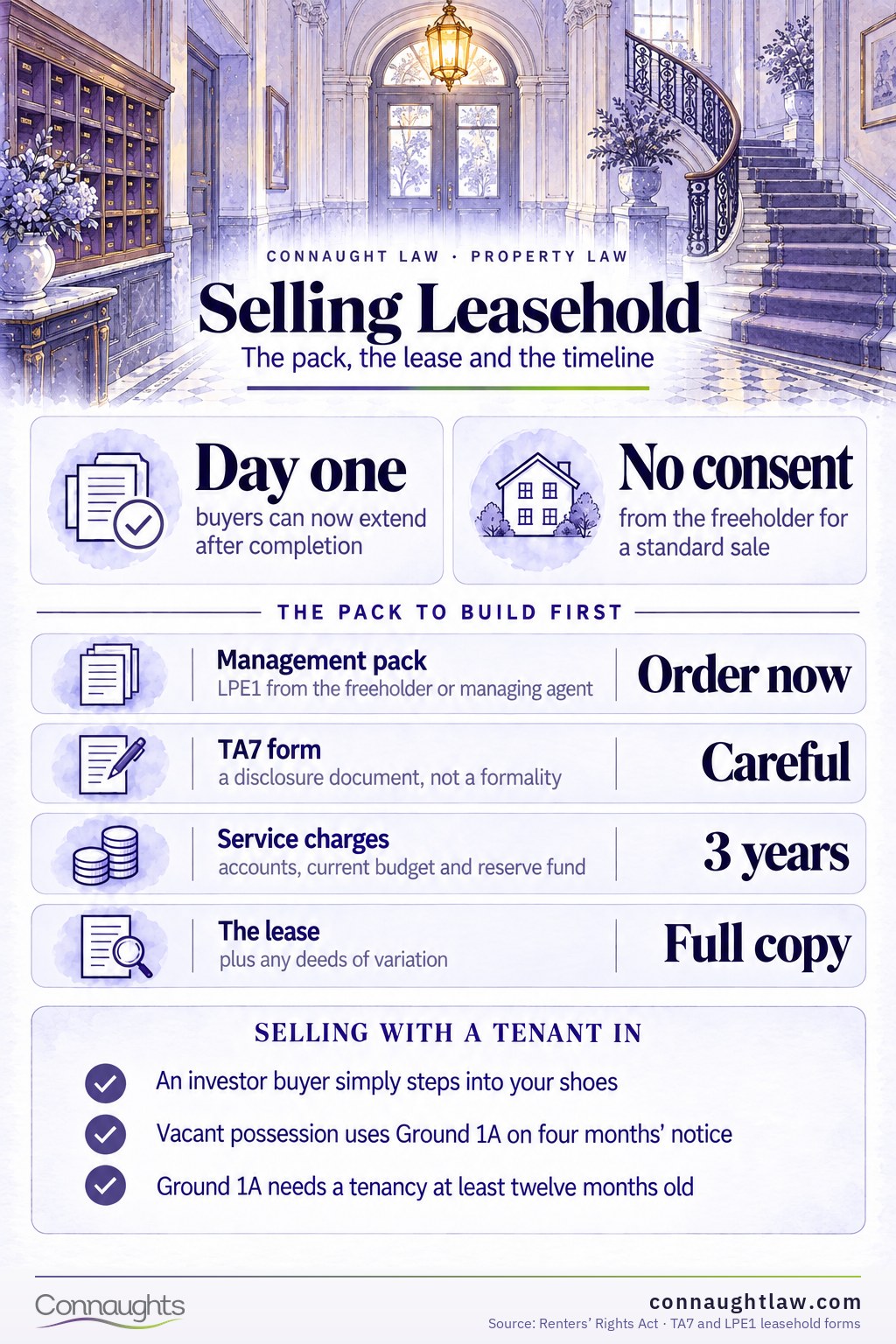
  • Management pack (LPE1/LPE2): ordered from the freeholder or agent at instruction - fees and turnaround times vary widely
  • Service charge accounts: typically three years, plus budget, reserve fund position and any Section 20 major works notices
  • Ground rent statements: receipts and the review clause's exact mechanism
  • Building safety documents: for relevant buildings, the landlord's certificate and leaseholder deed of certificate under the leaseholder protection rules, plus any EWS1 lenders request
  • Compliance items: buildings insurance, fire risk assessments where held, consents for past alterations
Order the Pack First: the management pack is the single most common cause of leasehold delay - agents charge for it, take weeks over it, and buyers cannot exchange without it. Instructing your conveyancer and ordering the pack the day the property lists routinely saves a month at the end, when the chain is fraying.

Pack fees and turnaround are negotiable pressure points rather than fixed facts. Ask the agent for the fee menu and timescale commitments in writing, chase in weekly cycles, and escalate to the freeholder where an agent sits on requests - buyers' solicitors see the date-stamps and draw conclusions about the building's management either way. Where a residents' management company holds the information, a cooperative director can shortcut weeks; another reason sellers should attend the AGM they usually skip.

Lease Length Impact on Property Values

Value steps down with the term. Above roughly 90 years, length is neutral; between 90 and 80, buyers price the coming extension and some lenders tighten; below 80 years, marriage value inflates the premium under the current rules and the buyer pool visibly thins; far below that, cash buyers dominate and discounts deepen. Because the valuation reforms are not in force, these thresholds bind in 2026 exactly as they did five years ago.

Short Lease Sale Strategies

Sellers of short leases choose between three honest strategies: extend before marketing (maximum price, months of lead time - the process in our lease extension guide); agree a simultaneous extension completing with the sale, funded from proceeds; or sell short with the defect priced in. The dishonest fourth strategy - marketing at a long-lease price and hoping - costs more than any of them, because renegotiation after survey and legal review lands at the worst possible leverage point.

Simultaneous extensions deserve their mechanics understood before being promised: the claim is negotiated with the freeholder during the sale, documents complete on the same day as the transfer, and the premium is paid from sale proceeds at completion. It requires a cooperative freeholder, a competent conveyancer on both sides and realistic timescales - but it lets a seller deliver a long lease without funding the premium upfront, which for many estates is the difference between a sale and a withdrawal.

Share-of-freehold sales carry their own file: the company's certificate of incorporation, accounts and member register travel with the flat, and the share or membership transfer must complete alongside the property transfer, usually with a director's certificate for the title restriction. A dormant or struck-off company discovered mid-sale is a genuine emergency - check Companies House status at instruction, restoration takes months.

Selling Process Timeline for Leasehold Properties

The sequence mirrors a freehold sale with extra rounds: instruction and pack ordering, marketing and offer, contract papers with the leasehold pack, buyer enquiries (expect a leasehold-specific round on charges, works and disputes), mortgage valuation with lender lease review, exchange, then completion with apportionments of service charge and ground rent to the day. Where the lease requires it, completion also triggers notice of transfer (and of charge) to the landlord with fees, and some leases add a deed of covenant or a management company share transfer with its own certificate for registration.

Timeline killers are predictable: pack delays, unanswered Section 20 questions during live major works (buyers fear uncosted bills - expect retention negotiations), missing consents for historic alterations, and unresponsive management companies at the share-transfer stage. Every one is manageable early and expensive late; the seller's conveyancer should be chasing third parties while marketing runs, not after offers land.

Selling Tenanted Flats After the Renters' Rights Act

Tenanted flats add the 2026 tenancy layer. Selling with the tenant in place transfers a periodic assured tenancy to an investor buyer - clean, but it narrows the market to landlords. Recovering possession first to sell vacant means Ground 1A: four months' notice, unavailable in the tenancy's first twelve months, genuine intention evidenced, and a twelve-month re-letting ban if the sale falls through. Sellers should choose the route deliberately and early, because switching mid-marketing wastes the notice period twice.

Estate agents matter differently in leasehold sales: the valuable ones pre-qualify buyers on lease facts (term, rent, charges) before viewings, saving everyone the offer that dies at mortgage stage. Brief the agent with a one-page lease summary at instruction - term remaining, ground rent and reviews, service charge and reserve, works planned - and insist it reaches every applicant. Buyers who proceed informed renegotiate less.

Timing the market matters less than timing the paperwork, but seasons still help: instructing in quiet weeks so the pack arrives before spring buyers do, avoiding marketing launches the week major works notices land, and refreshing accounts after year-end rather than selling on stale ones. Small sequencing choices, repeated across a chain, are how ordinary sellers finish early.

Maximizing Leasehold Property Sale Value

Fix what fails criteria before marketing: a lease extension where the term is short, a deed of variation where ground rent doubles aggressively, missing consents regularised with the freeholder, and building safety certificates chased through the landlord now rather than mid-chain. Presentation then does its ordinary work - but in leasehold, the paperwork is the presentation: a complete, organised pack signals a clean transaction to every buyer's solicitor who opens it, and clean transactions attract better offers than identical flats with chaotic files.

For genuinely problematic stock - very short leases, absent freeholders, unresolved building safety - the auction route converts defects into a price honestly and quickly, with legal packs doing the disclosure work upfront. Auction buyers price risk professionally; private-treaty buyers walk away from it. Matching the sale channel to the property's condition is itself a value decision, not an admission of defeat.

Chain strategy rounds out the seller's toolkit: leasehold flats often sit at the bottom of chains under first-time buyers, whose mortgage offers have expiry dates. Aligning the pack, enquiries and any extension mechanics with the offer's lifespan - and communicating dates candidly up the chain - prevents the silent countdown that collapses transactions which every party wanted to complete.

And where a sale strategy stalls entirely - a freeholder who will not engage, a defect too costly to fix - remember the collective options: neighbours acquiring the freehold together or taking over management can transform a building's saleability across every flat in it, an angle covered in our collective enfranchisement guide. Sellers rarely think building-wide; the ones who do sometimes fix the market they are selling into.

However the sale is structured, the constant is candour with your own professional team: disputes with the freeholder, informal alterations, arrears history and side agreements all surface eventually, and the version of events your conveyancer hears first should be the accurate one. Prepared disclosure is a negotiating position; discovered disclosure is a concession.

Professional selection matters symmetrically. A conveyancer who handles leasehold volume anticipates the enquiry rounds, knows the managing agents' habits, and drafts replies that close questions instead of breeding them - the seller-side counterpart of the buyer diligence in our guide to purchasing leasehold property. Specialist support through our lease extension and enfranchisement service pairs the sale with any pre-sale lease surgery it needs.

Tax Implications of Leasehold Property Sales

Selling your main home is normally free of capital gains tax under private residence relief. Selling a let or second leasehold property is not: the gain is chargeable, and UK residents must report and pay via the 60-day CGT process where tax is due, while non-resident sellers must file within 60 days regardless. Extension costs paid during ownership generally enhance the base cost, which is one more reason to keep every completion statement from the ownership file.

Capital Gains Tax When Selling Leasehold

Private residence relief has edges worth knowing before relying on it: the final months of ownership attract relief automatically even after moving out, periods of absence have their own rules, and letting part or all of the property during ownership can create a chargeable slice. Sellers who have ever let the flat should run the computation - or have it run - before completion rather than at the January deadline after it.

Completion-day apportionments carry small tax echoes - service charge and ground rent adjustments affect rental accounts for landlords - and sellers who previously claimed letting deductions should reconcile final-year figures with the sale. None of it is complicated with records; all of it is painful without them.

Frequently Asked Questions

What documents do I need to sell a leasehold flat?

The lease and title copies, the management pack (LPE1), three years' service charge accounts, ground rent statements, buildings insurance, consents for alterations and - in relevant buildings - building safety certificates. Ordering the pack at instruction is the single best thing a leasehold seller can do for the timetable.

Should I extend my lease before selling?

Below about 85-90 years, usually yes or via a simultaneous extension at completion: it widens the buyer and lender pool and recovers more than it costs in most markets. Since January 2025 buyers can claim immediately after purchase themselves, but they will price the premium - and the hassle - into their offer.

Does high ground rent stop my flat selling?

The AST-trap possession risk ended in December 2025, but lender criteria on ground rent amount and escalation survive it. Doubling clauses in particular still block mortgages. A deed of variation negotiated with the freeholder - or a scheme conversion where one exists - remains the durable fix before marketing.

How long does selling a leasehold property take?

Longer than freehold by the length of the third-party chain: management pack turnaround, leasehold enquiry rounds and any landlord consents. Sellers who order the pack on day one commonly transact on freehold-like timescales; sellers who wait for an offer first add weeks precisely when chains are most fragile.

What is Section 20 and why do buyers ask about it?

The consultation process for major works whose costs exceed statutory thresholds. Live or looming Section 20 works mean uncosted bills, so buyers ask, lenders care, and retentions get negotiated. Disclose early with the freeholder's cost estimates - surprises discovered late cost more than the works themselves.

Do I pay capital gains tax when I sell?

Not usually on your main home, thanks to private residence relief. On let or second properties the gain is taxable, with UK residents reporting and paying within 60 days where tax is due and non-residents filing within 60 days in almost all cases. Lease extension costs typically increase your base cost - keep the paperwork.

Can I sell with a lease under 80 years?

Yes - short leases sell every week, at prices reflecting the extension premium and the thinner, more cash-weighted buyer pool. The choice is strategic: extend first, complete a simultaneous extension, or price the defect honestly. What fails is marketing short at long-lease prices and renegotiating after survey.

Do the leasehold reforms make it better to wait before selling?

Waiting bets on the valuation reforms commencing (realistically 2027-28) while your lease shortens and holding costs run. For most sellers the arithmetic favours acting under known rules - especially near the 80-year threshold, where waiting under current law adds marriage value faster than reform could remove it.

Expert Leasehold Sale Support
Sale-Ready Preparation

Management packs, accounts, consents and building safety certificates assembled before marketing so buyers find answers, not questions

Pre-Sale Lease Surgery

Lease extensions, simultaneous completions and deeds of variation for onerous ground rents, unlocking lender approval and full pricing

Completion and Tax Coordination

Apportionments, landlord notices, share-certificate transfers and 60-day CGT compliance handled cleanly through to completion and registration

Leasehold sales are won in the first week of preparation, not the last week of the chain, for a sale that completes at full value, contact the specialist leasehold team at Connaught Law.

Contact Our Property Team

Disclaimer:

The information in this blog is for general information purposes only and does not purport to be comprehensive or to provide legal advice. Whilst every effort is made to ensure the information and law is current as of the date of publication it should be stressed that, due to the passage of time, this does not necessarily reflect the present legal position. Connaught Law and authors accept no responsibility for loss that may arise from accessing or reliance on information contained in this blog. For formal advice on the current law please don't hesitate to contact Connaught Law. Legal advice is only provided pursuant to a written agreement, identified as such, and signed by the client and by or on behalf of Connaught Law.