
Indefinite leave quietly dies abroad: two continuous years outside the UK lapses most ILR — five for EU Settlement Scheme settled status, four for Swiss citizens — and the way back is the Returning Resident visa: £726, decided on strong UK ties and a genuine intention to resettle. This guide covers when status lapses, the Appendix Returning Resident requirements, the ties evidence that wins cases, exemptions, and the options after refusal.
On This Page
Settled Status That Stopped Being Settled
ILR holders discover the lapse rule at the worst possible moment — an airline desk, years into an overseas posting that ran longer than planned. The rule itself sits in the Immigration (Leave to Enter and Remain) Order 2000: indefinite leave lapses automatically after the qualifying absence, and re-entry then requires the Returning Resident visa — an application that treats the lost status as the starting point, not the answer.
When ILR Lapses
Thresholds by Settlement Type
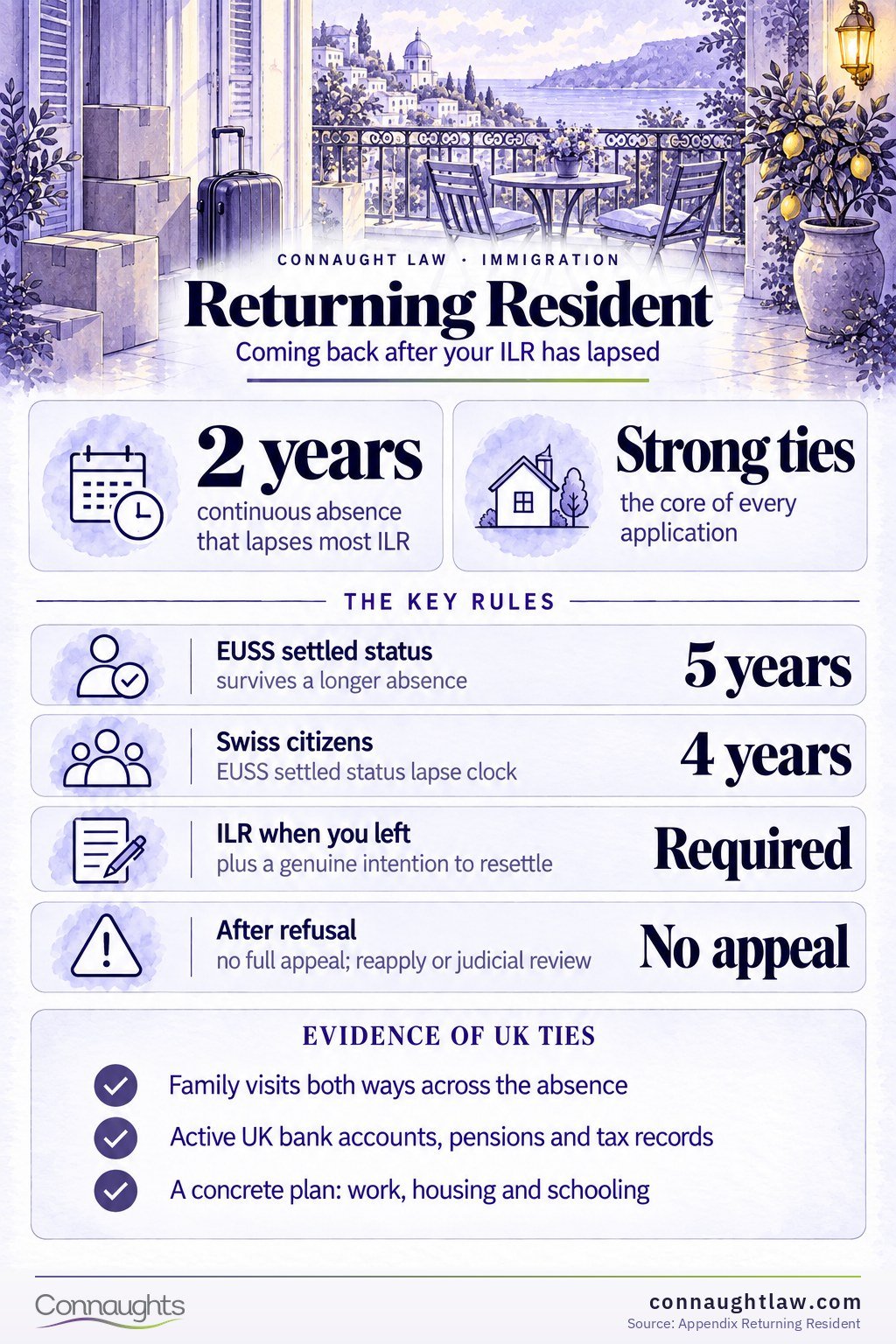
Standard ILR lapses after 2 continuous years outside the UK and Islands. EU Settlement Scheme settled status survives 5 years (4 for Swiss citizens). The clock is continuous absence — any genuine return resets it — but token visits engineered only to reset the clock invite scrutiny at the border, where officers can question whether residence was truly maintained.
Eligibility
The Appendix Returning Resident Test
The visa asks two questions under Appendix Returning Resident: did you hold indefinite leave when you last left, and do you now genuinely intend to make the UK your permanent home again? Between them sits the evaluative core — strong ties to the UK maintained through the absence — assessed against the caseworker guidance in the round: why you left, how long you stayed away, and what pulled you back.
Length of Original Residence
The decades matter: someone who lived in the UK for thirty years before a five-year absence presents differently from someone who settled, left within months, and returned a decade later. Long original residence plus a well-explained absence — a posting, a family illness abroad, a fixed-term contract — is the winning pattern; short residence followed by long absence is the losing one.
Strong Ties Evidence
Evidence Categories
- Family: British or settled relatives, and the visits both ways across the absence.
- Property: a home kept, rented out with return in mind, or family property ties.
- Finances: UK bank accounts kept active, pensions, tax records, National Insurance history.
- The absence explained: employment contracts, postings, caring obligations with end dates.
- The return plan: work arranged, housing, schooling — resettlement in motion, not in theory.
Applying and Fees
Fees and Processing
The application costs £726, made online from abroad with biometrics at a visa application centre, and — as a settlement-category application — decides on the longer entry clearance timescales rather than the visitor standard. Fee waivers are not part of this route's ordinary architecture, though the destitution principles in our fee waiver guide occasionally bear on family situations.
Tuberculosis Testing
Applicants from TB-list countries need a test certificate like any settlement-length entrant — a detail that surprises returning residents who never needed one before, and one worth booking early where clinics are scarce.
Exemptions
The lapse rule spares defined groups: partners of HM Forces members and of British citizens in Crown service abroad, whose accompanying absences do not cost them their status.
Windrush Scheme Provisions
The Windrush scheme stands apart entirely — Windrush-generation returnees and their families use its free, dedicated framework rather than the Returning Resident visa, with documentary standards built for lives lived before digital records.
After Refusal
Refusal Reasons and Prevention
Refusals concentrate where ties evidence is thin, absences stretch far past the threshold unexplained, or the return plan reads as another visit. No published success rate exists for the route — treat any percentage online as invention — and the remedies after refusal are a rebuilt fresh application or, for legal error, judicial review; there is no full appeal. Applicants whose absence involved refusals or bans elsewhere should read our re-entry ban guide before filing.
Family Members
The visa is individual: family members without their own lapsed ILR apply on the family routes, and a mixed household — one returning resident, one new partner, children born abroad — needs its applications sequenced together, which is our family team's daily work. Once back, residence rebuilds toward the thresholds afresh, and the wider options — including starting again on a current route — sit in our settlement routes guide.
Frequently askedQuestions about returning resident status
How long can I stay outside the UK with ILR?
Up to 2 continuous years without losing it — 5 for EUSS settled status, 4 for Swiss citizens. Beyond that the leave lapses automatically, and returning requires the Returning Resident visa.
Does a short visit reset the two-year clock?
A genuine return resets continuous absence, but visits engineered purely to preserve status draw border scrutiny — officers can examine whether the UK remained your home. A pattern of token visits protects less than people assume.
What is the returning resident visa success rate?
No official rate is published. Outcomes track evidence: long original residence, a well-documented reason for the absence and a concrete resettlement plan succeed; thin ties and open-ended absences fail. Build for the sceptical caseworker.
How much does a returning resident visa cost?
£726, applied for online from abroad with biometrics at a visa application centre, plus a TB certificate where your country is on the testing list. Settlement-category processing timescales apply.
If I get the visa, is my ILR restored?
You return as a settled person — but the absence clocks start fresh, and another two years abroad lapses it again. Returnees planning further international life should consider naturalisation, which ends the lapse risk permanently.
Can I just apply for a visitor visa instead?
You can enter as a visitor, but it concedes the settlement — visitors cannot live in the UK, and the concession complicates a later returning resident application. Decide which status you are claiming before you travel, not at the border.
Tell us when you left, why, and what still connects you here. We'll assess the ties evidence honestly and build the resettlement case before you book anything.
Get Expert Advice