
The International Sportsperson visa is the single route for professional athletes and qualified coaches taking paid sporting roles in the UK — governing body endorsement first, club sponsorship second, visa third. Since Brexit it covers European signings as fully as anyone else, and since 2023 the Elite Significant Contribution rules have opened doors for emerging talent without senior international caps. This guide covers the 2026 requirements, fees and settlement path.
On This Page

Elite Sport's Own Immigration Route
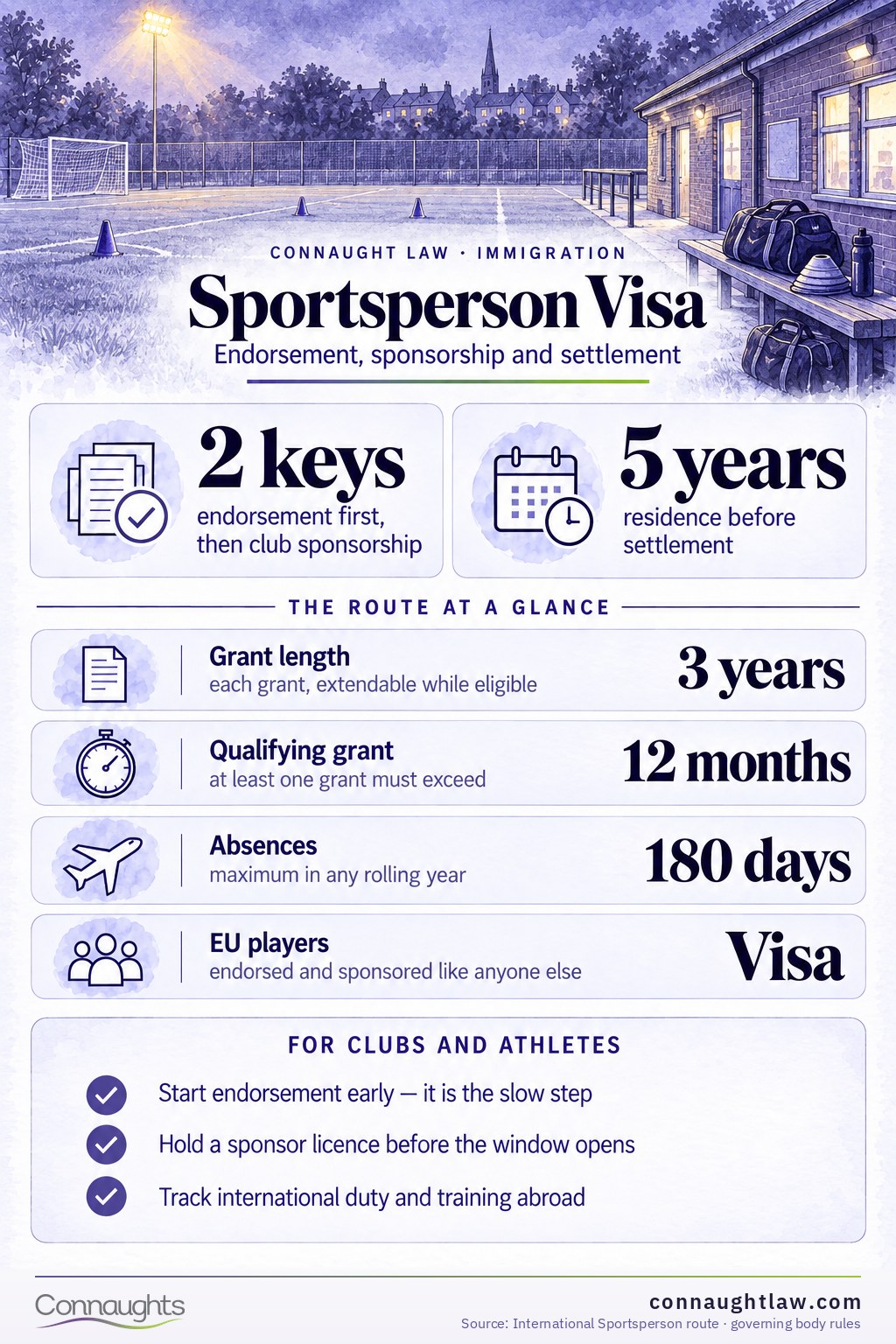
The route on gov.uk runs on a two-key lock: the sport's governing body must endorse the athlete or coach as elite-level, and a licensed club or organisation must sponsor the role. Visas run up to three years at a time and extend indefinitely while eligibility holds — and, unusually among sponsored routes, five years of residence opens settlement provided at least one grant exceeded twelve months. Almost every other work route prohibits professional sport entirely, which makes this one unavoidable for competitive careers.
Endorsement from the sport's governing body plus a certificate of sponsorship from a licensed UK club — both mandatory, in that order. Fees run £340 to £943 by length and location, the health surcharge is £1,035 a year, and five years' residence with one grant over twelve months opens settlement.
How Brexit Transformed UK Sports Immigration
Freedom of movement once carried European squads across borders without paperwork; since 2021 an EU signing needs endorsement, sponsorship and a visa like any Brazilian or Japanese recruit. The change rebuilt British recruitment around governing body criteria — and produced the widely reported casualties, from European players refused entry on matchday weeks to clubs discovering that transfer deadlines and visa timelines obey different clocks.
The Elite Significant Contribution Framework
The ESC rules, introduced in 2023, answer the emerging-talent problem: players judged on the quality of the league they come from and their development potential rather than accumulated international caps, within small per-club annual quotas that are larger in the top divisions. It is how clubs sign the prospect who has not yet played for his country — the profile that once failed the points assessment however obvious the talent. Quotas and criteria sit in the governing body's published rules and move season by season, so check the current edition before building a transfer around one.
Current Costs and Processing
Fees by Visa Length
| Application | Fee | Health surcharge |
|---|---|---|
| 12 months or less | £340 | £1,035 per year (£776 children) |
| Over 12 months — applying overseas | £819 | £1,035 per year, paid upfront |
| Over 12 months — extending or switching in the UK | £943 | £1,035 per year, paid upfront |
Processing Times and Planning
Decisions usually arrive within three weeks overseas and eight weeks in-country, with priority services at £500 (five working days) and £1,000 (next working day). The visa is rarely the slow step — endorsement is. Governing body panels have their own calendars and evidence demands, so the realistic planning horizon for a contested case runs months, not weeks, and transfer-window strategies should be built backwards from that.
Governing Body Endorsement
Each sport's body applies its own published criteria — the FA's points-based assessment of appearances, league quality and continental football; the ECB's international and county thresholds; the RFU's caps and Premiership standards; the LTA's rankings-based rules for tennis professionals and coaches. The endorsement is the route's real examination: applications that fail, fail here, and the appeal and exceptions machinery is sport-specific. Coaches note — the route covers qualified elite coaching roles, not only players.
Certificate of Sponsorship and Club Obligations
With endorsement in hand, the sponsoring club assigns a certificate of sponsorship under its sponsor licence — the same machinery as our CoS guide describes, with sporting-specific duties layered on: certificates are personal to the athlete, reporting obligations follow squad changes, and loan moves need immigration attention as well as football paperwork. Clubs new to sponsorship should license before the window opens, not during it.
Settlement and Long-Term Residency
Five years of continuous residence on the route opens indefinite leave to remain, provided at least one visa exceeded twelve months, absences stayed within 180 days in any rolling year, and the English and Life in the UK requirements are met — the fee is the standard £3,226, with the mechanics mirroring our settlement guide. The absence rule deserves a professional athlete's particular respect: international duty, winter training blocks and away legs abroad all count, and our settlement team has rebuilt more than one travel schedule the January before an ILR application.
Case Studies and Challenges
The reported cases teach timing above all: European clubs have lost players for continental fixtures to entry refusals, while successful signings of emerging internationals have turned on early governing body engagement and applications sequenced well before deadlines. Where an endorsement or visa is refused, routes of challenge exist — our appeals team and refusal specialists handle both the sporting and Home Office ends.
Alternative Routes for Sports Professionals
Short engagements — trials, exhibitions, amateur competition — can fit the visitor rules' sporting provisions, which permit no employment or extended stay. Support staff whose roles are genuinely managerial or technical sometimes fit standard work routes, though most prohibit playing or coaching professionally. Athletes changing direction entirely can use the in-country switching rules. For the competitive career itself there is one road, and our business immigration team walks clubs and athletes down it every season.
Frequently askedQuestions about the International Sportsperson visa
Who qualifies for the visa?
Professional sportspeople and qualified coaches endorsed by their sport's governing body as elite-level and internationally established, with a certificate of sponsorship from a licensed UK club or sporting organisation. Both keys — endorsement and sponsorship — are mandatory.
Do EU players need visas now?
Yes — since Brexit ended free movement, European athletes are sponsored and endorsed on identical terms to the rest of the world. The change reshaped recruitment strategy across UK sport, particularly in football's lower divisions.
What is the ESC exemption?
The Elite Significant Contribution provisions let clubs sign emerging players who fail the standard points criteria, judged on league quality and potential within small per-club quotas — larger in the top divisions. The criteria live in the governing body's current published rules.
How much does the visa cost?
£340 for grants of a year or less; £819 applying from overseas or £943 in-country for longer grants; plus £1,035 a year in health surcharge per person. Priority decisions cost £500 or £1,000 more, and dependants pay their own fees.
Can family members come?
Yes — partners and children under 18 apply as dependants with their own fees, surcharge and maintenance amounts, and can work and study in the UK. Their settlement clocks run alongside the athlete's own.
Does the route lead to permanent residence?
Yes — five years' continuous residence qualifies for ILR at £3,226, provided at least one visa lasted over twelve months, absences stayed within the 180-day rolling limit, and the English and Life in the UK tests are passed. Citizenship typically follows a year later.
Tell us the sport, the governing body position and the window you are working to. We'll sequence endorsement, sponsorship and the visa so the deal completes on the pitch, not in the queue.
Get Expert Advice