
Once the decision to divorce is made, what matters is sequence: gather documents before positions harden, agree interim arrangements before conflict sets them, and run the legal application, the money and the children in the right order. This is the practical checklist — from the first week's actions through the five-stage divorce process to the administrative loose ends people forget until they bite.
On This Page

Divorce Well by Doing Things in the Right Order
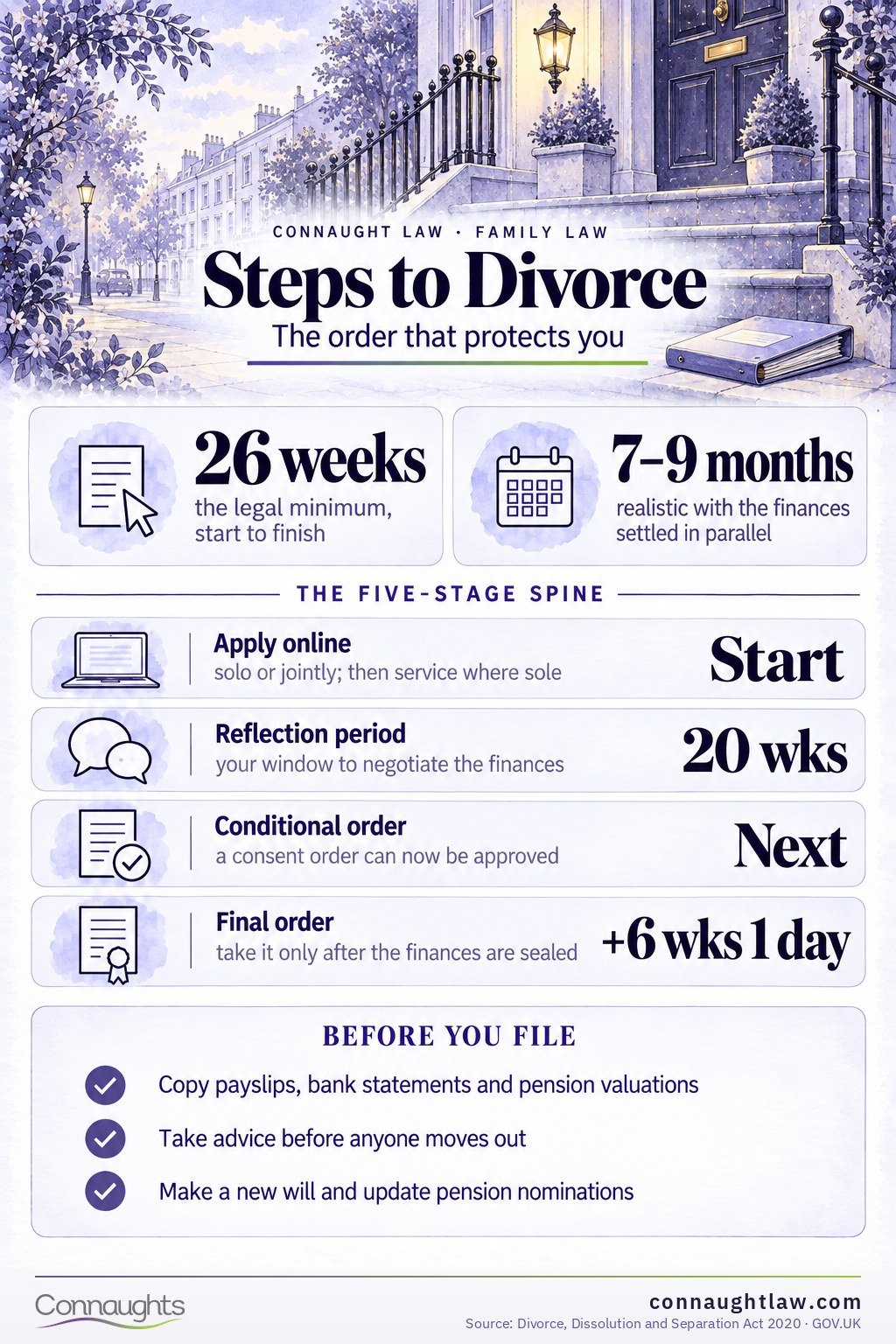
Most expensive divorce mistakes are sequencing mistakes: moving out before advice, agreeing money before disclosure, applying for the final order before the finances are sealed. The no-fault process gives you a predictable legal spine — application, 20 weeks, conditional order, six weeks and a day, final order — and the practical work hangs off it in a definite order.
Take advice, gather financial documents and secure your own accounts first. Agree interim arrangements for children and bills. Apply (£628, online), use the 20-week period to negotiate the financial settlement, have the consent order approved after the conditional order — and only then take the final order. Update the admin as you go.
The First Week's Actions
Preparation Checklist
- Initial legal advice, even one fixed-fee session — sequencing errors happen early
- Copies of financial documents: payslips, bank and mortgage statements, pension valuations, tax returns
- Your marriage certificate (order a copy if lost — the application needs it)
- Your own bank account and independent post/email arrangements
- A note of passwords, joint commitments and direct debits before access questions arise
The Divorce Application
Five Stages from Filing to Final Order
Stage one: apply online at gov.uk, solo or jointly, with the £628 fee (from 13 July 2026). Stage two: service and acknowledgement where sole. Stage three: the 20-week reflection period — your negotiation window. Stage four: the conditional order. Stage five: the final order, from six weeks and a day later, timed after your consent order where finances are still settling. The full legal detail lives in our no-fault divorce guide.
Money: Interim and Final
The Financial Workstream
Interim first: agree who pays the mortgage, bills and children's costs while things settle, and avoid emptying or racking up joint facilities — courts notice. Then the settlement: exchange full disclosure, negotiate directly, through mediation or solicitors, and convert the agreement into a consent order (£62) once the conditional order arrives. The gov.uk money and property guidance covers the framework; our financial obligations guide explains why skipping the order leaves every claim open.
Children: Agree Early, Formalise Lightly
The Children Workstream
Settle the practical pattern quickly — where the children live, the contact rhythm, school runs and holidays — because interim patterns harden into precedents. Record it in a parenting plan; the gov.uk guidance on children after separation covers the framework, and court orders are only needed where agreement fails. Child maintenance runs on the CMS formula from separation, not from the divorce.
Housing and the Family Home
Take advice before anyone moves out: leaving rarely forfeits financial claims, but it changes negotiating reality and children's patterns. Register home rights if the home is in your spouse's sole name, keep the mortgage paid whatever else is in dispute, and treat the home's destination — sale, transfer, deferred sale — as part of the overall settlement rather than a standalone fight. Our who gets the house guide maps the options.
The Administrative Sweep
Updates People Forget
Make a new will — divorce changes how your existing one operates, and separation alone changes nothing. Update pension death-benefit nominations and life insurance beneficiaries, review joint credit and utilities, and after the final order update your name where relevant and keep several sealed copies of the order. None of this is glamorous; all of it prevents the posthumous and financial surprises that follow divorces done in a hurry. Our divorce team runs this checklist with every client file.
Frequently askedQuestions about the practical steps to divorce
What should I do first when divorcing?
Take initial legal advice and copy the financial documents — payslips, statements, pension valuations — before positions harden. Open your own bank account, locate the marriage certificate, and agree interim arrangements for bills and children before filing anything.
Should I move out of the family home?
Not before advice. Leaving rarely forfeits your financial claims, but it can shift the practical dynamics around the children and the negotiation. If you do leave, keep contributing to the mortgage where possible and register home rights if the home is in your spouse's name.
How long does the divorce process take from start to finish?
About 26 weeks at the legal minimum — 20 weeks to the conditional order, six weeks and a day to the final order. Seven to nine months is realistic once finances are negotiated in parallel, which is the sensible sequence rather than a delay.
When should we sort out the money?
Negotiate during the 20-week period so a consent order is ready when the conditional order unlocks the court's power to approve it — and generally take the final order only after the consent order is sealed, protecting pension and inheritance positions in the meantime.
Do I need to change my will when I divorce?
Yes — make a new one at separation, because until the final order your spouse remains your spouse for inheritance purposes, and after it your existing will takes effect as if your former spouse had died. Update pension nominations and life insurance at the same time.
Tell us where you are in the process and what has already been agreed or moved. We will put the steps in the right order and flag the ones that cannot wait.
Get Expert Advice