Trinidad and Tobago nationals have needed a visa to visit the UK since 12 March 2025, when decades of visa-free travel ended with same-day effect. The visit now costs £135 for six months — £506, £903 or £1,128 for long-term visas — plus biometrics in Port of Spain and a three-week wait. This guide covers why the requirement arrived, every current fee, the documents that get applications approved, and the transit rules for airside connections.
On This Page

Visa-Free Travel Ended Overnight
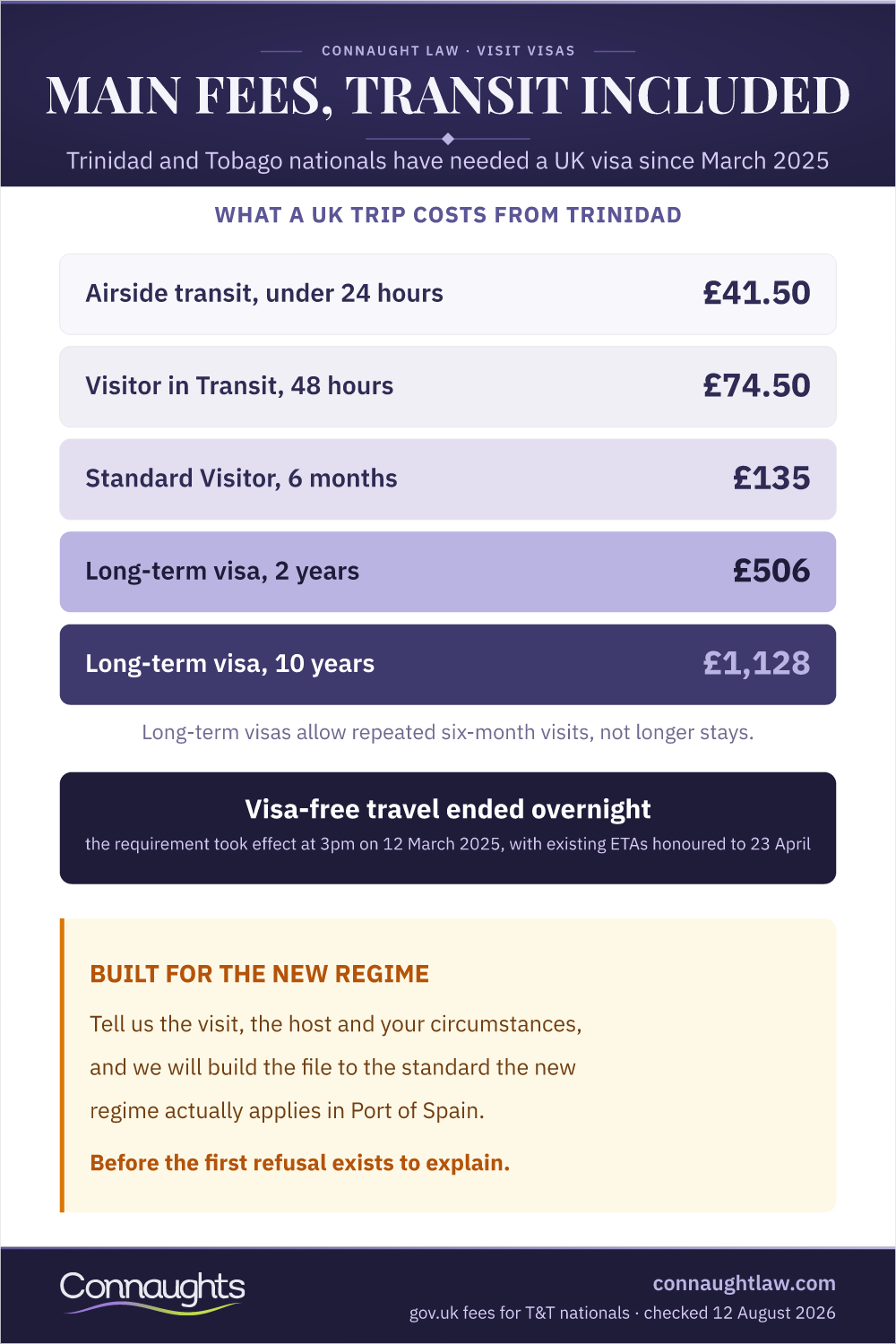
At 3pm GMT on 12 March 2025, Trinidad and Tobago moved onto the UK's visa national list — one of the sharpest travel policy changes the Caribbean has seen, taking effect the day it was announced. A short transition honoured existing Electronic Travel Authorisations until 23 April 2025; since then, every T&T passport holder visiting the UK needs a visitor visa applied for in advance, under the arrangements set out in the gov.uk guidance for T&T nationals.
Why the Requirement Arrived
A Regional Pattern
The UK's move was not isolated: Ireland imposed its own visa requirement on T&T nationals on 9 May 2025, and Bermuda followed on 17 July 2025. Governments cited the same driver — a sustained rise in asylum claims from arriving visitors — and the parliamentary exchanges around the UK decision are on record in Hansard for 12 March 2025.
The Longer History
For a Commonwealth country whose citizens travelled freely to Britain for generations — and whose Windrush-era arrivals helped build modern Britain — the change carries weight beyond logistics. Families with mixed status histories should note that the visa requirement changes nothing for those with British citizenship claims; our Windrush scheme guide covers the routes that predate any visa list.
Costs
Visa Types and Current Fees
| Visa | Fee | Stay |
|---|---|---|
| Standard Visitor | £135 | Up to 6 months |
| Long-term — 2 years | £506 | 6 months per visit |
| Long-term — 5 years | £903 | 6 months per visit |
| Long-term — 10 years | £1,128 | 6 months per visit |
| Medical treatment visitor | £234 | Up to 11 months |
| Direct Airside Transit (DATV) | £41.50 | Airside only, under 24 hours |
| Visitor in Transit | £74.50 | Up to 48 hours |
Costs Beyond the Fee
Budget past the Home Office line: application centre service charges in Port of Spain, document courier options, photography and translation where needed, and the £500 priority service for five-working-day decisions where offered. For families applying together the totals compound — four standard visas approach TT$5,000 before service costs, which makes the long-term options worth pricing for regular visitors.
Applying from Trinidad and Tobago
Required Documentation
- Passport valid for the whole stay, plus previous passports showing travel history.
- Three to six months of bank statements matching the trip's cost.
- Employment letter with approved leave, or business and income evidence.
- Ties evidence: property, family responsibilities, studies or business at home.
- UK-side documents for family visits — host status, accommodation and any funding, with an invitation letter.
- Travel plan consistent with every date above.
Biometrics and Timeline
Applications complete online, then biometrics enrol at the visa application centre in Port of Spain, with the standard three-week decision clock running from that appointment. First-generation caseworking means evidence standards are still settling — complete, reconciled files are clearing while thin ones draw refusals that then shadow reapplications.
Transit Rules
DATV or Visitor in Transit
Connections through Heathrow or Gatwick now need transit permission too: the £41.50 Direct Airside Transit visa where you stay airside and fly on within 24 hours, or the £74.50 Visitor in Transit visa where you pass border control — collecting bags, changing airports — and leave within 48 hours. Booking itineraries that avoid UK connections remains the cheaper answer for pure transit to Europe.
Comparison with Other Routes
The visitor visa covers visits only. T&T nationals moving for work, study or family follow the same sponsored and family routes as other visa nationals — where repeated visits are really about joining a partner or building a business, the right conversation is with our family visa team or business immigration team rather than another visitor application.
The Asylum Context
The government's stated rationale was data: ministers cited asylum claims from T&T nationals rising from a pre-pandemic average of around 49 a year to 439 in 2024 — against a record 108,138 total UK asylum claims that year, per the Home Office asylum statistics. The proportion remained small, but the trajectory triggered the standard policy response. For individuals, the practical point is that the visa process now front-loads scrutiny: credibility questions once asked at the border are asked on paper, in advance.
Practical Guidance
Common Application Mistakes
The early refusal patterns are familiar from other new visa regimes: applications treating the visa as a formality because travel used to be free, funds evidence assembled in a hurry before summer trips, host documents missing from family visits, and travel history left undocumented. The fix is treating the application as the genuine visitor test it is — evidence of the Trinidad life you are returning to carries the file.
Maximising Approval Prospects
Apply early inside the three-month window, reconcile every figure, document the return, and declare any history honestly — a US or Canadian refusal surfaces in checks, and concealment converts a survivable fact into a refusal ground. Where a refusal has already landed, our refusal team reads the notice before the reapplication; where the visit involves treatment, the medical visitor rules apply, and the general framework is in our Standard Visitor guide.
Frequently askedQuestions from Trinidad and Tobago travellers
Do Trinidad and Tobago citizens need a visa for the UK?
Yes — since 12 March 2025, all T&T passport holders need a visitor visa before travelling, including for tourism and family visits. The former ETA arrangement ended for new travel, with existing authorisations honoured only until 23 April 2025.
How much does a UK visa cost from Trinidad?
£135 for the six-month Standard Visitor visa. Long-term visas cost £506 for 2 years, £903 for 5 and £1,128 for 10 — each allowing six-month visits — plus application centre service charges and the optional £500 priority service.
Do I need a visa to transit through Heathrow?
Yes — a £41.50 DATV for airside connections under 24 hours, or a £74.50 Visitor in Transit visa if you pass border control and leave within 48 hours. Routing that avoids UK stopovers avoids both.
How long does the visa take from Port of Spain?
Three weeks from biometric enrolment is the published standard, with priority service availability varying. Apply as soon as travel firms up — up to three months ahead — and never against non-refundable bookings.
Why did the UK impose the requirement?
Ministers cited rising asylum claims from arriving visitors — from roughly 49 a year pre-pandemic to 439 in 2024 — and moved T&T to the visa national list with same-day effect, a step Ireland and Bermuda echoed within months.
Does the visa change affect Windrush or citizenship claims?
No — visa policy governs visits, not status. Those with claims to British citizenship through the Windrush scheme or descent hold rights that no visa list touches, and pursuing them is often the better long-term answer for families with UK roots.
Tell us the visit, the host and your circumstances. We'll build the file to the standard the new regime actually applies — before the first refusal exists to explain.
Get Expert Advice