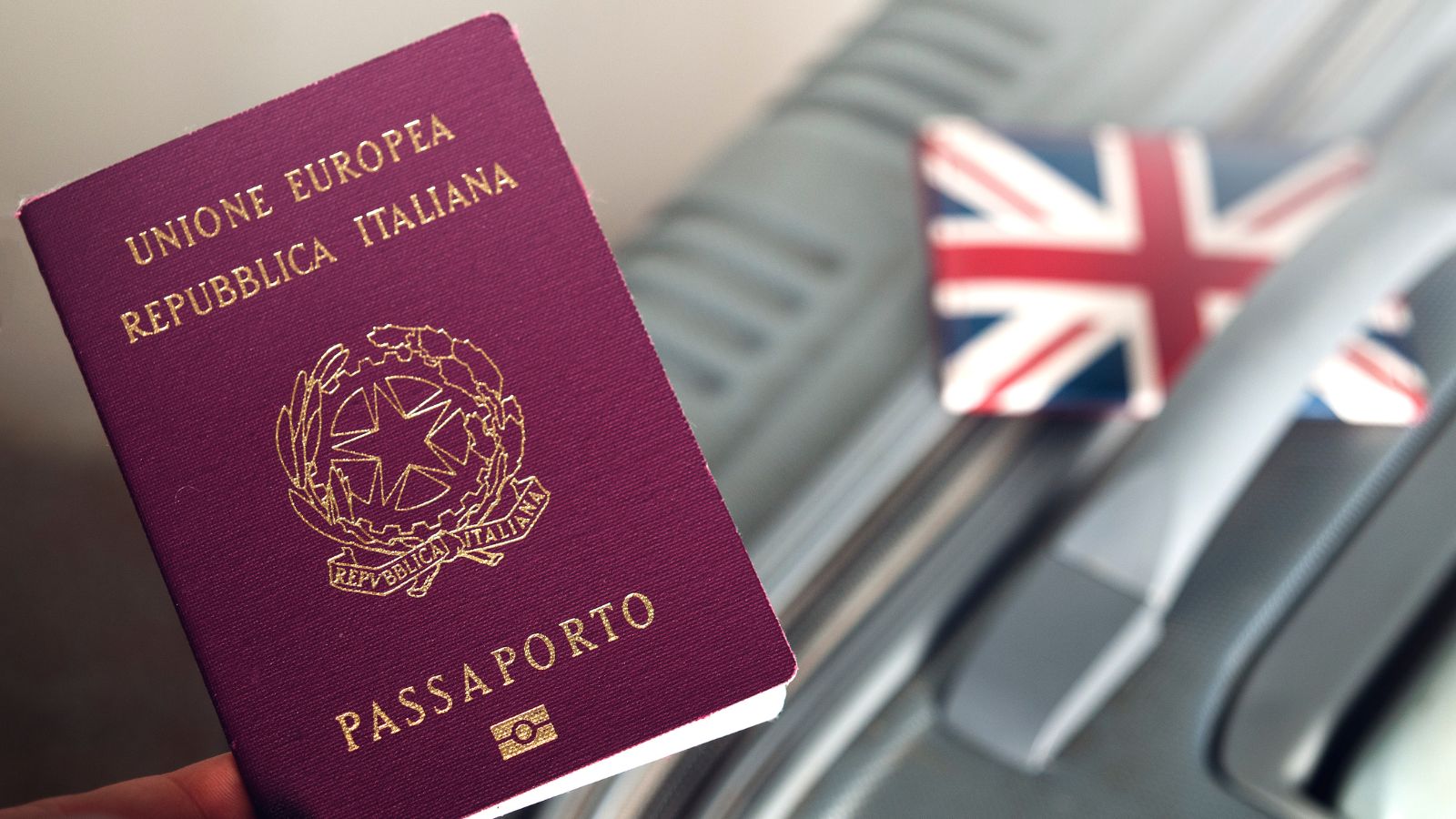
Understanding Dual National Passport Rules UK 2026 and ETA Enforcement Requirements
Dual national passport rules UK 2026 represent the most significant change to British border entry procedures since Brexit, directly affecting an estimated 1.2 million British citizens who hold dual nationality with non-visa-required countries. From 25 February 2026, carriers including airlines and ferry operators must enforce full Electronic Travel Authorisation verification before departure, meaning British dual nationals can no longer rely solely on their foreign passport to travel to the United Kingdom without additional documentation proving their right of abode.
The practical consequences extend far beyond administrative inconvenience. British citizens who have never held or have allowed their UK passport to lapse now face potential boarding refusal when attempting to return to their own country of citizenship, their homes, and their employment. EU nationals who acquired British citizenship through the EU Settlement Scheme pathway, Commonwealth citizens with dual nationality, and British-born individuals living abroad on foreign passports all face urgent documentation requirements that demand immediate attention and, in complex cases, professional legal guidance navigating nationality verification procedures.
Understanding the legal framework, documentary options, transitional concessions, and potential grounds for legal challenge proves essential for affected individuals seeking to protect their travel rights while complying with the new enforcement regime. The distinction between the right of abode itself and the documentary evidence required to demonstrate that right at the point of travel creates a situation where lawful British citizens may be denied re-entry through no fault of their own.
- • What Changed for Dual Nationals Under the UK ETA System?
- • Who Is Affected by the Dual National Passport Rules UK 2026?
- • British Passport vs Certificate of Entitlement: Which Option?
- • What Transitional Arrangements Apply for Expired UK Passports?
- • What Are the Grounds for Legal Challenge?
- • What Immediate Steps Should Affected Dual Nationals Take?
- • Frequently Asked Questions
What Changed for Dual Nationals Under the UK ETA System?
The UK Government's rollout of the Electronic Travel Authorisation system represents the most significant overhaul of border entry procedures since Brexit. Under the previous regime, a British citizen who also held a passport from a non-visa-required country could travel to and from the UK using their foreign passport, potentially facing delays at passport control but ultimately gaining entry. That position changed fundamentally when the Home Office announced full ETA enforcement from 25 February 2026, requiring carriers to confirm every passenger's travel permission through automated digital checks before departure.
The legal framework underpinning these changes rests on the Immigration Act 1971, which establishes the right of abode as the statutory entitlement of every British citizen to enter and remain in the United Kingdom without restriction. That right remains entirely unaffected by the new rules. What has changed is the documentary evidence required to demonstrate that right at the point of travel, with carriers now acting as de facto border enforcement agents tasked with verifying travel authorisation before passengers board.
The consequences of this shift are severe. According to the Home Office ETA factsheet, since 19.6 million ETAs have been issued since the scheme's October 2023 launch, the system is now deeply embedded in carrier operations. Airlines cannot resolve complex nationality questions at check-in and face financial penalties for transporting inadequately documented passengers. The default outcome when ETA exemption cannot be established is boarding denial — placing British citizens in the extraordinary position of being prevented from returning to their country of citizenship.
Who Is Affected by the Dual National Passport Rules UK 2026?
The dual national passport rules UK 2026 apply to any individual who holds British citizenship alongside nationality from a non-visa-required country, does not currently hold a valid British passport, and intends to travel to the United Kingdom using their foreign passport. This encompasses EU, EEA, and other nationals who obtained British citizenship as EU nationals through naturalisation after years of settled status, as well as British-born citizens living abroad who have allowed UK passports to lapse.
High-Risk Groups Requiring Immediate Action
- Recent British Citizens: Individuals who obtained British citizenship recently and have not yet applied for a British passport, including those whose citizenship certificate remains at their UK address while they travel abroad
- British Citizens Overseas: Those currently outside the UK whose travel plans do not allow sufficient time to obtain documentation before their return journey, particularly those in countries distant from British consular services
- Passport Renewal Conflicts: Those awaiting the return of a foreign passport following renewal, preventing a simultaneous British passport application that requires submission of all current passports
- Children with Automatic Citizenship: Children born abroad to British parents who hold automatic British citizenship by descent but have never had a UK passport issued — the same documentation requirements apply regardless of age
- Commonwealth Dual Nationals: Long-established communities with dual British-Commonwealth citizenship who have historically travelled on their non-UK passport without difficulty
The Irish passport exemption, while explicable by reference to the Common Travel Area arrangements, reinforces the asymmetric impact on those of EU, Australian, Canadian, and other non-Irish nationality. Irish citizens do not need an ETA and can continue travelling freely to the UK on their Irish passport, creating a material distinction between British dual nationals based on the identity of their second nationality.
British Passport vs Certificate of Entitlement: Which Option?
The two documentary options available to dual nationals carry substantially different costs, processing timelines, and practical implications. Understanding these differences enables affected individuals to make informed decisions balancing urgency of travel, financial considerations, and long-term documentation strategy.
| Comparison Factor | British Passport | Certificate of Entitlement |
|---|---|---|
| Cost (Adult) | Approximately £100 | £589 |
| Format | Physical document | Digital endorsement linked to UKVI eVisa account (from 26 February 2026) |
| Standard Processing | Up to 10 weeks (3 weeks if applying from UK) | Several weeks (varies by location) |
| Overseas Application | Yes — Passport Office accepts overseas applications with notarised copies in certain circumstances | Yes — via nearest British Consulate or High Commission |
| Carrier Recognition | Universally recognised — guarantees immediate boarding | Recognised but may require additional verification at check-in |
| Best For | Long-term solution; recommended for all affected dual nationals | Those who cannot defer travel and need documentation linked to their foreign passport |
Neither document is issued automatically upon the grant of British citizenship — a critical point that catches many long-standing British citizens unaware. Individuals who obtained citizenship after years of settlement and indefinite leave to remain may never have needed a British passport, having relied entirely on their foreign passport for international travel including UK entry. The new enforcement framework fundamentally changes this position, requiring proactive documentation steps that many affected individuals have had limited opportunity to take.
What Transitional Arrangements Apply for Expired UK Passports?
Recognising the disruption caused by the enforcement timeline, the Home Office guidance for dual citizens outlines temporary transitional arrangements designed to provide a limited safety net for those caught without current documentation. Under these arrangements, carriers may allow travel where a British dual citizen presents an expired UK passport issued in 1989 or later together with a valid passport from an ETA-eligible nationality, provided personal details on both documents match and an approved ETA is linked to the foreign passport.
The critical qualification is that boarding under this concession operates entirely at the carrier's discretion. It does not create a guaranteed right to travel. Airlines and ferry operators face financial penalties for transporting inadequately documented passengers and may refuse boarding even where the transitional criteria appear satisfied, particularly where staff are uncertain about the concession's application or where automated check-in systems cannot accommodate the arrangement. Individuals who board under the transitional concession may also face additional identity checks upon arrival before proceeding through UK passport control.
What Are the Grounds for Legal Challenge?
Several potential bases exist upon which affected individuals or representative organisations may seek to challenge the implementation of these rules through immigration judicial review proceedings or formal complaints under human rights legislation.
Procedural Fairness and Legitimate Expectation
The Home Office has stated that public information about the changes has been available since October 2024. However, the adequacy of that communication remains open to serious question. The doctrine of legitimate expectation in public law may afford redress to individuals who reasonably continued to rely on the pre-existing position and who were not given a fair opportunity to regularise their documentation. The House of Commons Library analysis acknowledges that numerous affected individuals only became aware of the changes through informal channels — social media, word of mouth — rather than direct Home Office notification, which is a material consideration in any fairness challenge.
Discrimination Arguments Under the Equality Act 2010
The rules as drafted create a distinction between British citizens based on their acquisition of dual nationality — a status which correlates strongly with national or ethnic origin. Arguments under the Equality Act 2010 and the Human Rights Act 1998 (Articles 8 and 14 ECHR) merit serious consideration. The exemption afforded to Irish passport holders, while explicable by reference to the Common Travel Area, reinforces the asymmetric impact on those of EU and other non-Irish nationality, potentially engaging indirect discrimination provisions where a neutral policy disproportionately affects particular national or ethnic groups.
Proportionality Concerns
Even where the policy objective — alignment with international border norms — is accepted as legitimate, the abruptness of implementation and the disproportionate financial burden imposed may not satisfy the proportionality test required under public law and human rights principles. The £589 Certificate of Entitlement cost represents nearly six times the cost of a British passport, creating a substantial barrier for individuals who cannot afford either option at short notice. The failure to introduce a transitional scheme or low-cost emergency travel authorisation for affected individuals adds force to proportionality arguments, particularly given that campaign groups including the3million have called on the Government to pause the changes and introduce an interim solution.
What Immediate Steps Should Affected Dual Nationals Take?
- - Apply for a British passport immediately — the Passport Office now accepts applications from outside the UK and may accept notarised copies of supporting documentation in certain circumstances
- - Consider the Certificate of Entitlement if travel plans cannot be deferred — applications must be made to the nearest British Consulate or High Commission if overseas
- - Check eligibility for the expired passport transitional concession — you need an expired UK passport issued 1989 or later, a valid foreign passport, and an approved ETA with matching personal details
- - Contact the Home Office directly if stranded or at imminent risk of boarding denial — escalate to the Passport Office and to the relevant MP or constituency office where appropriate
- - Ensure children with automatic British citizenship have documentation — the same rules apply regardless of age, and parents must apply on their behalf
- - Seek legal advice if denied boarding or facing ongoing disruption to your right of return — grounds for judicial review or formal human rights complaints may exist
For those who previously held a UK passport, the emergency travel document process provides an alternative where urgent travel is required and standard passport renewal timelines are insufficient. Applications can be made through British consulates and embassies overseas, though the Home Office has indicated that obtaining emergency travel documents may be more difficult for individuals who have never held a UK passport, as citizenship verification processes take longer without existing Passport Office records.
These changes serve as a practical reminder that the grant of British citizenship, whilst conferring the right of abode, does not of itself create the documentary apparatus needed to exercise that right at a modern, technology-driven border. For a government that has made ease of legal migration a policy ambition, the implementation of this reform has been poorly communicated and operationally disruptive for a significant cohort of lawful British citizens. Whether political pressure will result in further concessions remains to be seen — in the meantime, those affected must act swiftly to protect their travel rights.
- - From 25 February 2026, British dual nationals must present a valid UK passport or digital Certificate of Entitlement to board transport to the UK
- - The right of abode under the Immigration Act 1971 is unchanged — only the documentary evidence required to demonstrate it at the point of travel has changed
- - An estimated 1.2 million British dual nationals are affected, with Irish passport holders exempt under Common Travel Area arrangements
- - A British passport (approximately £100) is strongly recommended over the Certificate of Entitlement (£589) as the primary long-term solution
- - Transitional arrangements for expired UK passports exist but are at carrier discretion and should not be relied upon
- - Legal challenge grounds exist on procedural fairness, discrimination, and proportionality bases for those adversely affected
Frequently Asked Questions
Do dual national passport rules UK 2026 affect my right of abode?
No. The right of abode under the Immigration Act 1971 remains entirely unaffected. Every British citizen retains the statutory entitlement to enter and remain in the United Kingdom without restriction. What has changed is the documentary evidence required to demonstrate that right before boarding transport to the UK, with carriers now required to verify travel permission through automated digital checks before departure.
Can I get an ETA as a British dual national instead of a passport?
No. British and Irish citizens are exempt from the ETA requirement and cannot obtain one. This creates the documentation gap affecting dual nationals — presenting only a foreign passport means carrier systems cannot verify ETA eligibility, as British citizens do not appear in the ETA database. The only accepted documents are a valid British passport or a digital Certificate of Entitlement confirming the right of abode.
How much does a Certificate of Entitlement cost compared to a British passport?
A Certificate of Entitlement currently costs £589, while a British passport costs approximately £100 for an adult. The Certificate of Entitlement is now issued digitally and stored in a UKVI eVisa account rather than as a physical vignette. Given the substantial cost difference, a British passport is the recommended option for most affected individuals unless travel urgency makes the Certificate of Entitlement the only viable short-term solution.
Are Irish dual nationals affected by these dual national passport rules UK 2026?
No. Irish citizens are exempt from the ETA requirement under Common Travel Area arrangements and can continue travelling to the UK using their Irish passport without an ETA, British passport, or Certificate of Entitlement. This exemption applies to British-Irish dual nationals who can present a valid Irish passport when travelling. The exemption does not extend to EU nationals of other nationalities, even those with similar historical travel patterns to the UK.
Can I travel to the UK with an expired British passport under transitional rules?
Potentially, but with significant limitations. Carriers may allow travel where you hold an expired UK passport issued in 1989 or later together with a valid foreign passport with an approved ETA, provided personal details match on both documents. However, boarding under this concession is entirely at the carrier's discretion, you may face additional identity checks on arrival, and many airlines cannot accommodate different documents for different legs of a journey. This arrangement is temporary and should not replace obtaining a current British passport.
Do children with automatic British citizenship need a UK passport under these rules?
Yes. Children who hold automatic British citizenship by birth or descent but have never had a UK passport issued are subject to the same documentation requirements. They cannot use an ETA for travel to the United Kingdom and will need either a British passport or a Certificate of Entitlement. Parents or guardians should apply for a British passport on their behalf as a priority, particularly for families with upcoming travel plans.
Can I apply for a British passport from overseas if I am already abroad?
Yes. The Passport Office accepts applications from outside the UK, and in certain circumstances will accept notarised copies of supporting documentation. Processing times for overseas applications are typically longer than domestic applications. Those who previously held a UK passport may also apply for an emergency travel document through British consulates and embassies, though the Home Office has indicated this may be more difficult for individuals who have never held a UK passport due to longer citizenship verification processes.
What legal action can I take if denied boarding as a British dual national?
Individuals denied boarding may have grounds for judicial review challenging the implementation of these rules on procedural fairness, discrimination, or proportionality bases. Formal complaints under the Human Rights Act 1998 (Articles 8 and 14 ECHR) and the Equality Act 2010 merit consideration, particularly where the denial affects the right to family and private life. Specialist immigration solicitors can assess the merits of individual cases, advise on immediate documentary remedies, and pursue legal action where appropriate including escalation to the Home Office and judicial review proceedings.
Expert Immigration and Nationality Legal Guidance
Nationality and Citizenship Advice
Expert assessment of British citizenship status, documentation requirements, right of abode verification, and strategic guidance navigating dual nationality complexities under the new ETA enforcement framework
Documentary Remedies and Home Office Escalation
Urgent assistance with British passport applications, Certificate of Entitlement processes, emergency travel document requests, and direct Home Office escalation for stranded British citizens facing boarding refusal
Judicial Review and Legal Challenge
Assessment of legal challenge grounds including procedural fairness, discrimination claims under the Equality Act 2010 and Human Rights Act 1998, and proportionality arguments supporting judicial review proceedings
The new dual national passport rules UK 2026 create immediate documentation urgency for an estimated 1.2 million British citizens. Understanding your options, protecting your travel rights, and identifying potential legal remedies requires expert immigration and nationality law guidance.
For expert guidance on dual nationality documentation, British passport applications, Certificate of Entitlement processes, and the merits of judicial review proceedings, contact Connaught Law's specialist immigration and nationality team. Our London-based experts provide comprehensive support for all dual national documentation matters ensuring your right of abode is properly evidenced and protected.